
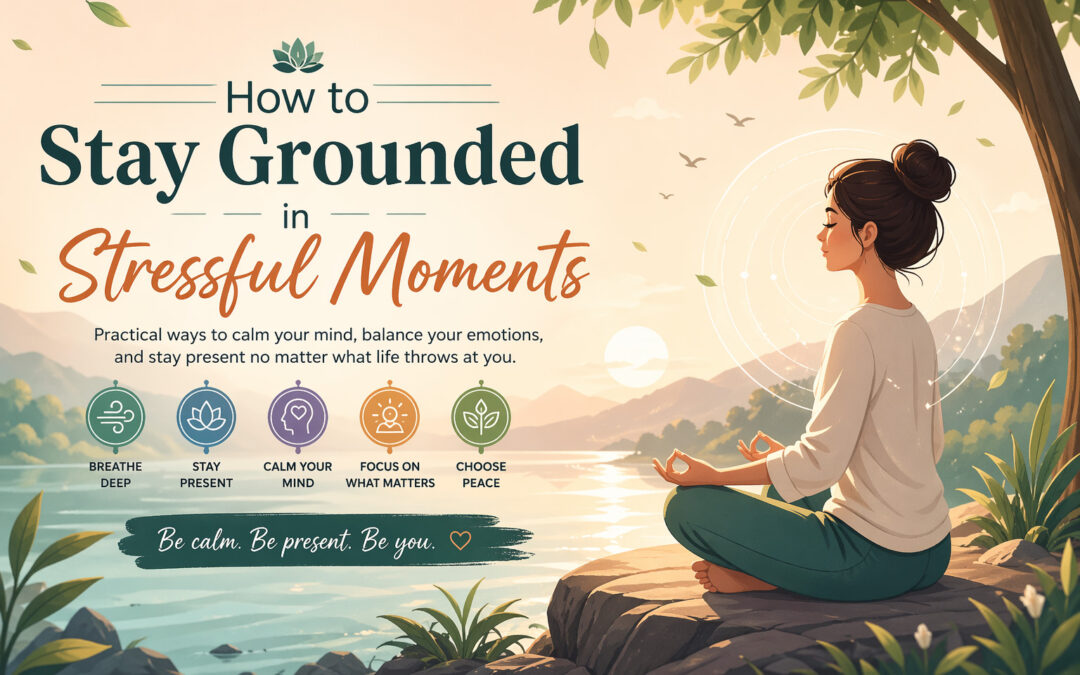
Stressful moments are an unavoidable part of life. Whether it’s work pressure, relationship conflicts, financial worries, or unexpected challenges, stress can easily overwhelm the mind and body. In such moments, staying grounded becomes essential. Being grounded means staying emotionally stable, mentally clear, and connected to the present moment instead of getting lost in fear or anxiety.
The good news is that grounding is a skill you can develop with practice. Here are some effective and practical ways to stay grounded when life feels overwhelming.
1. Focus on Your Breath
One of the fastest ways to calm your mind is by controlling your breath. When you are stressed, your breathing becomes shallow and rapid, which signals the brain to stay in a “fight or flight” mode.
Try this simple technique:
- Inhale deeply through your nose for 4 seconds
- Hold your breath for 4 seconds
- Exhale slowly through your mouth for 6–8 seconds
Repeat this for a few minutes. This helps activate your body’s relaxation response and brings your attention back to the present moment.
2. Use the 5-4-3-2-1 Grounding Technique
This method is extremely helpful when your thoughts are racing. It brings your awareness back to reality using your senses:
- 5 things you can see
- 4 things you can touch
- 3 things you can hear
- 2 things you can smell
- 1 thing you can taste
This exercise shifts your focus away from stress and anchors you in the present environment.
3. Slow Down Your Thoughts
Stress often creates a loop of negative thinking. Instead of trying to stop your thoughts completely, slow them down.
Ask yourself:
- Is this thought 100% true?
- What evidence do I have for it?
- Will this matter one week or one month from now?
This helps reduce emotional intensity and brings logical clarity.
4. Move Your Body
Physical movement is one of the most underrated stress relievers. Even a short walk can release built-up tension and improve mental clarity. Stretching, yoga, or simple body movements can help release stress hormones and improve emotional balance.
When your body feels relaxed, your mind naturally follows.
5. Ground Yourself Physically
Sometimes, connecting physically with your surroundings can help you feel stable again. You can:
- Press your feet firmly on the ground
- Hold a cold glass of water
- Touch a textured object like wood or fabric
- Sit upright and feel your body supported by the chair
These small actions send signals to your brain that you are safe.
6. Accept What You Cannot Control
A major source of stress is trying to control everything. Instead, focus on what you can control—your response, your actions, and your mindset.
Acceptance does not mean giving up; it means choosing peace over resistance. When you stop fighting reality, your mind becomes calmer and more grounded.
7. Practice Mindfulness Daily
Mindfulness is the habit of being fully present in the moment. Even 5–10 minutes of daily mindfulness can train your brain to stay calm under pressure. You can practice by:
- Meditating
- Observing your breath
- Paying attention to daily tasks like eating or walking
Over time, your emotional resilience improves significantly.
Conclusion
Staying grounded in stressful moments is not about eliminating stress completely, but about managing your response to it. With consistent practice of breathing techniques, mindfulness, and self-awareness, you can develop a calm and balanced mind even in difficult situations. Life will always have challenges, but your inner stability will determine how you experience them.