
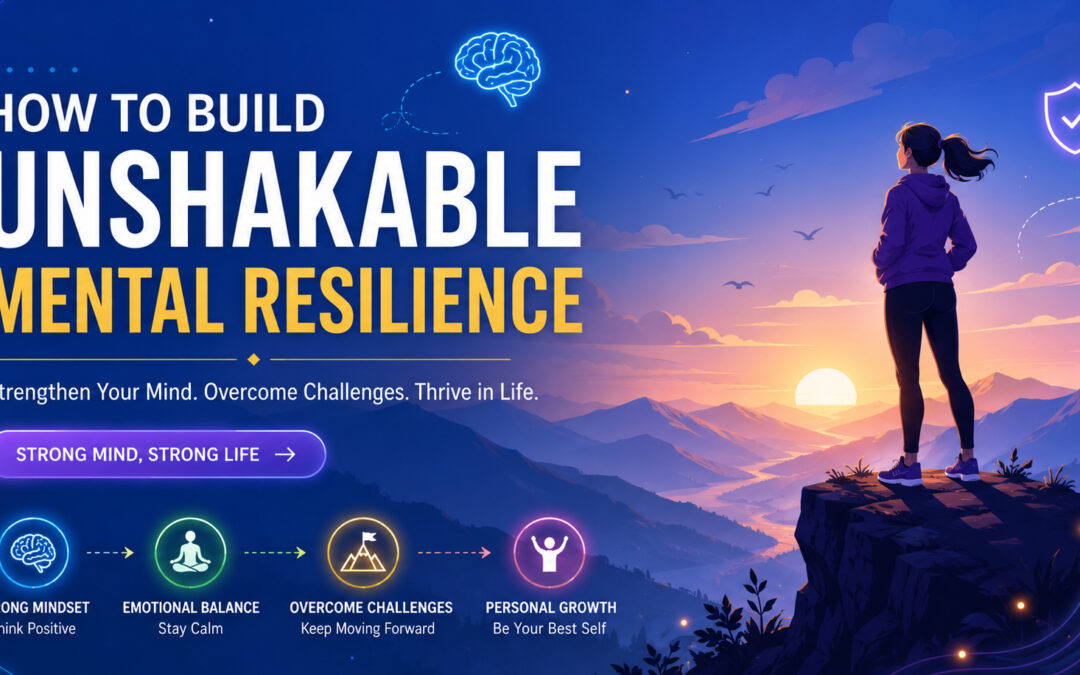
Life is unpredictable. Challenges, setbacks, and stressful situations are part of every journey. While some people struggle to recover from difficulties, others seem to bounce back stronger than before. The difference often lies in one powerful skill: mental resilience.
Mental resilience is the ability to adapt, recover, and remain emotionally strong during difficult times. It does not mean avoiding stress or pretending everything is fine. Instead, it means learning how to face challenges with confidence, clarity, and emotional balance.
In today’s fast-paced world, building mental resilience is more important than ever. Whether you are dealing with personal struggles, career pressure, relationship issues, or unexpected life changes, resilience can help you stay grounded and move forward.
Understand That Challenges Are a Part of Growth
One of the biggest mindset shifts in developing resilience is accepting that difficulties are a natural part of life. Every challenge carries an opportunity to learn, grow, and become stronger.
Instead of asking, “Why is this happening to me?” try asking, “What can I learn from this experience?” This simple change in perspective can transform obstacles into valuable life lessons.
People with strong mental resilience do not avoid failure. They use setbacks as stepping stones toward personal growth and success.
Develop a Positive and Flexible Mindset
Your thoughts have a direct impact on how you respond to stressful situations. Negative thinking can make challenges feel overwhelming, while a positive mindset helps you stay calm and focused.
This does not mean ignoring reality or forcing fake positivity. It means training yourself to focus on solutions rather than problems.
A flexible mindset is equally important. Life rarely goes exactly as planned, and resilient people know how to adapt when circumstances change. Being open to change allows you to recover faster and maintain emotional balance during uncertain times.
Build Healthy Daily Habits
Mental resilience is strongly connected to your daily routine. Small, healthy habits practiced consistently can improve emotional strength and mental clarity over time.
Here are a few habits that support resilience:
- Get enough sleep every night
- Exercise regularly to reduce stress
- Eat nutritious foods that support brain health
- Practice mindfulness or meditation
- Spend time outdoors and stay connected with nature
- Limit excessive social media and negative content consumption
Taking care of your physical health directly improves your mental and emotional well-being.
Strengthen Your Emotional Awareness
Emotionally resilient people understand their feelings instead of suppressing them. Ignoring emotions often leads to increased stress and anxiety.
Take time to recognize what you are feeling and why. Journaling, meditation, or talking with someone you trust can help you process emotions in a healthy way.
When you become more emotionally aware, you gain better control over your reactions. This allows you to respond thoughtfully instead of reacting impulsively during difficult moments.
Create a Strong Support System
No one builds resilience alone. Having supportive relationships can make a huge difference during challenging times.
Surround yourself with people who encourage, motivate, and uplift you. Friends, family members, mentors, or support groups can provide emotional comfort and practical advice when you need it most.
At the same time, do not hesitate to ask for help. Seeking support is a sign of strength, not weakness.
Focus on What You Can Control
Stress often increases when we focus too much on situations outside our control. Resilient individuals learn to direct their energy toward actions they can actually influence.
You may not control external events, but you can control your attitude, decisions, habits, and responses.
When faced with a difficult situation, ask yourself:
- What can I do right now?
- What actions are within my control?
- How can I respond in a healthy and productive way?
This mindset reduces anxiety and helps you feel more empowered.
Practice Self-Compassion
Building resilience does not mean being perfect all the time. Everyone experiences moments of weakness, fear, and self-doubt.
Treat yourself with the same kindness and patience you would offer a close friend. Self-compassion helps reduce negative self-talk and supports emotional recovery during hard times.
Remember that resilience is built gradually through experience, persistence, and self-awareness.
Final Thoughts
Mental resilience is not something people are simply born with. It is a skill that can be developed through consistent habits, healthy thinking patterns, and emotional growth.
By embracing challenges, maintaining a positive mindset, building healthy routines, and staying connected to supportive people, you can strengthen your ability to handle life’s ups and downs with confidence.
The stronger your mental resilience becomes, the more capable you will feel in facing uncertainty, overcoming obstacles, and creating a balanced, fulfilling life.