
In a world that often celebrates being busy and available at all times, saying “no” can feel uncomfortable. Many people worry about disappointing others, damaging relationships, or appearing selfish. However, learning to say no is not about rejecting people—it is about respecting your own time, energy, and emotional well-being.
The ability to set healthy boundaries is one of the most valuable life skills you can develop. When you say no with confidence and kindness, you create space for the people, priorities, and experiences that truly matter. Instead of feeling guilty, you begin to feel empowered because your decisions align with your values.
Why Saying “No” Is So Difficult
Many of us grow up believing that being helpful means always saying yes. We fear conflict, rejection, or criticism, so we agree to requests even when they leave us overwhelmed or emotionally drained.
People-pleasing habits often come from a desire to be accepted or appreciated. While kindness is a beautiful quality, constantly putting yourself last can lead to stress, resentment, burnout, and emotional exhaustion.
Remember, every time you say yes to something that doesn’t serve you, you’re often saying no to your own peace, goals, or self-care.
The Power of Healthy Boundaries
Boundaries are not walls that keep people out. They are healthy limits that protect your emotional, mental, and physical well-being.
When you confidently communicate your boundaries, you teach others how to treat you. Healthy relationships grow stronger through honesty and mutual respect—not through constant self-sacrifice.
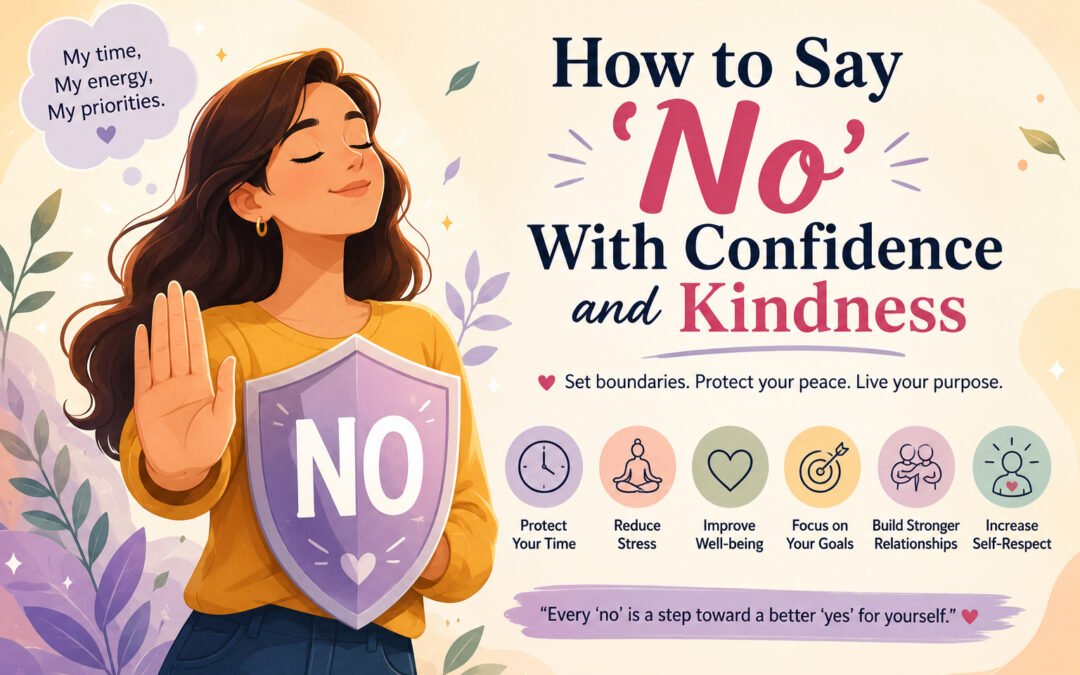
Saying no allows you to:
- Protect your time and energy.
- Reduce unnecessary stress.
- Improve your emotional well-being.
- Focus on your personal goals.
- Build more authentic relationships.
- Increase self-respect and confidence.
How to Say No With Confidence
You don’t need a long explanation or an elaborate excuse. A simple, respectful response is often enough.
Here are a few examples:
- “Thank you for thinking of me, but I can’t commit right now.”
- “I appreciate the invitation, but I’ll have to decline.”
- “I’m focusing on other priorities at the moment.”
- “I’m not available, but I hope it goes well.”
Confidence comes from being clear rather than defensive. The more you practice, the more natural it becomes.
Kindness Doesn’t Mean Saying Yes
One of the biggest misconceptions is that kindness requires constant availability. True kindness includes compassion for yourself as well as others.
You can decline a request while still showing empathy.
For example:
“I understand this is important to you, and I truly appreciate you asking me. Unfortunately, I can’t take this on right now.”
This response communicates respect without sacrificing your own needs.
Let Go of the Guilt
Feeling guilty after saying no is common, especially if you’ve spent years prioritizing everyone else’s happiness.
Instead of asking yourself, “Am I letting someone down?” try asking:
- Am I honoring my values?
- Am I protecting my mental health?
- Am I making a decision that’s sustainable?
- Would I expect someone else to ignore their own needs for me?
Healthy guilt fades as your confidence grows.
Practice Makes It Easier
Like any skill, setting boundaries becomes easier with repetition.
Start with smaller situations before tackling bigger ones. Decline invitations when you’re genuinely unavailable. Avoid overcommitting at work. Give yourself permission to pause before answering requests instead of responding immediately.
The more you practice, the more comfortable you’ll become expressing your needs without fear.
Confidence Comes From Self-Respect
People who confidently say no are not rude or uncaring. They simply understand that their energy is valuable.
When your actions align with your priorities, you feel calmer, more focused, and emotionally balanced. Confidence isn’t about pleasing everyone—it’s about making decisions that reflect who you truly are.
The people who genuinely care about you will respect your honesty and appreciate your authenticity.
Final Thoughts
Learning how to say no with confidence and kindness is one of the greatest gifts you can give yourself. It allows you to protect your peace, strengthen your relationships, and create a life based on intention rather than obligation.
Every respectful “no” is also a meaningful “yes” to your well-being, your goals, and your personal growth. Remember, setting boundaries is not selfish—it is an act of self-respect. The more confidently you honor your needs, the more balanced, fulfilled, and emotionally healthy your life becomes.