
Introduction: The Endless Loop of Overthinking
Have you ever found yourself replaying conversations in your head or worrying about things that haven’t even happened yet? That’s overthinking — the mental habit of analyzing situations so deeply that it leads to stress rather than clarity. It’s something most of us experience, especially when we care deeply or want to make the right decisions.
But here’s the truth: overthinking isn’t all bad. When approached with awareness, it can be transformed into a powerful tool for self-understanding and growth. The secret lies in shifting from overthinking to insightful reflection — from endless worrying to purposeful introspection.
Understanding the Difference: Overthinking vs. Reflection
Before we can turn overthinking into something meaningful, we must understand how it differs from reflection.
-
Overthinking traps you in repetitive thoughts. It’s driven by fear, self-doubt, or regret. You focus on what went wrong or what might go wrong, creating emotional paralysis.
-
Reflection, on the other hand, leads to clarity. It’s calm, curious, and constructive. You look at experiences to understand yourself and your patterns better, helping you make wiser choices next time.
The difference is intentionality. When you reflect, you ask why and what can I learn? rather than what if?
Why We Fall Into Overthinking
Overthinking often stems from our desire for control. We want to predict outcomes, avoid mistakes, or protect ourselves from emotional pain. However, this need for certainty can trap us in mental loops that drain our energy.
Common triggers of overthinking include:
-
Fear of failure or rejection
-
Past regrets or unresolved guilt
-
Perfectionism and self-doubt
-
Social comparison and worry about others’ opinions
While these feelings are natural, allowing them to dominate your thoughts can prevent growth. The key is to pause, observe, and redirect.
5 Steps to Turn Overthinking into Insightful Reflection
1. Recognize When You’re Overthinking
Awareness is the first step. Notice when your mind starts looping around the same thoughts or “what if” scenarios. Ask yourself:
“Am I analyzing to learn or to worry?”
If it’s worry-driven, take a step back. Simply labeling the thought as overthinking can interrupt the cycle.
2. Shift from Judgment to Curiosity
Overthinking often carries a tone of self-blame — “I shouldn’t have done that,” or “Why am I like this?” Reflection, however, is rooted in curiosity.
Instead, ask:
“What can this situation teach me about myself?”
“How can I grow from this experience?”
This small shift transforms mental noise into personal insight.
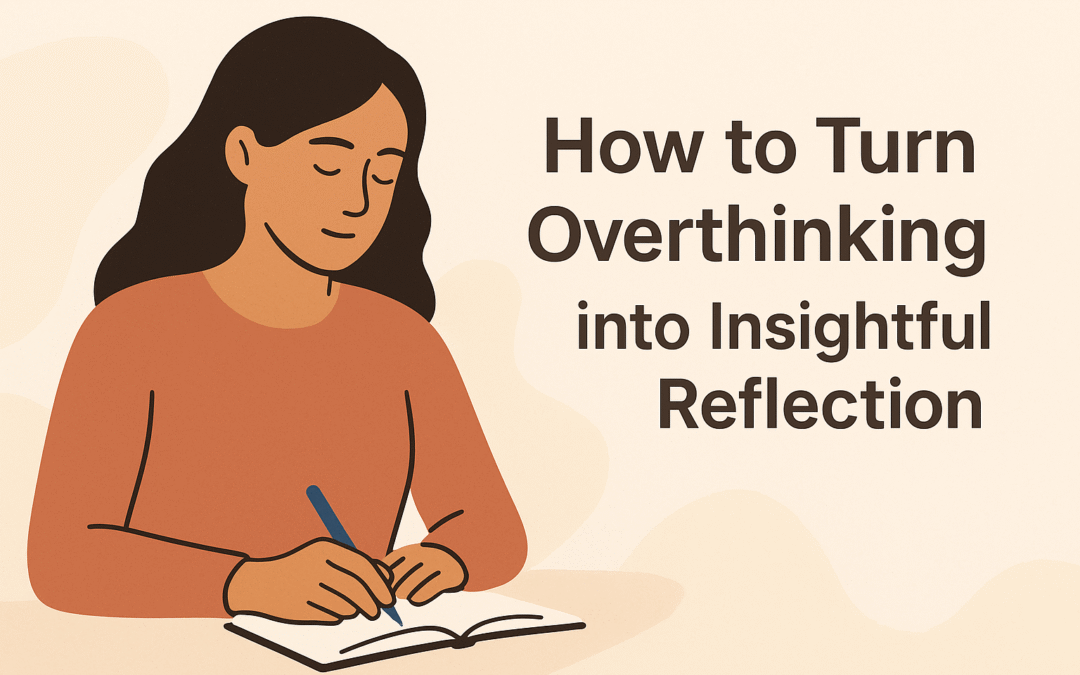
3. Journal Your Thoughts
Writing helps organize thoughts and separate facts from feelings. When you journal, you externalize your worries and see them from a new perspective.
Try this structure:
-
What happened? (Describe without judgment)
-
How did I feel?
-
What did I learn?
-
What will I do differently next time?
This reflective process turns chaos into clarity.
4. Set Boundaries with Your Mind
Reflection has a time and place. If your thoughts start spiraling, give yourself a mental boundary — tell yourself you’ll revisit the thought later.
For example, “I’ll reflect on this tonight for 10 minutes, then let it go.”
By creating limits, you train your mind to focus intentionally rather than endlessly.
5. Practice Self-Compassion
Overthinking thrives on self-criticism. The gentler you are with yourself, the less power your thoughts have. Remind yourself:
“I’m learning, and it’s okay not to have all the answers right now.”
Compassion allows insight to flourish where judgment once lived.
The Gift of Reflection
When you turn overthinking into reflection, you transform anxiety into awareness and doubt into direction. It’s not about silencing your thoughts — it’s about understanding them.
Reflection gives meaning to experiences, helping you grow emotionally and mentally. Over time, you’ll notice that the same situations that once caused overthinking now inspire deeper self-understanding.
Conclusion: From Chaos to Clarity
Overthinking doesn’t have to be your enemy. It can become your greatest ally when you use it as a bridge to insight. By pausing, reflecting, and showing compassion to yourself, you can find clarity where confusion once ruled.
The next time your mind spirals, take a deep breath and turn inward with purpose. Because true growth begins not in avoiding thoughts — but in learning from them.