
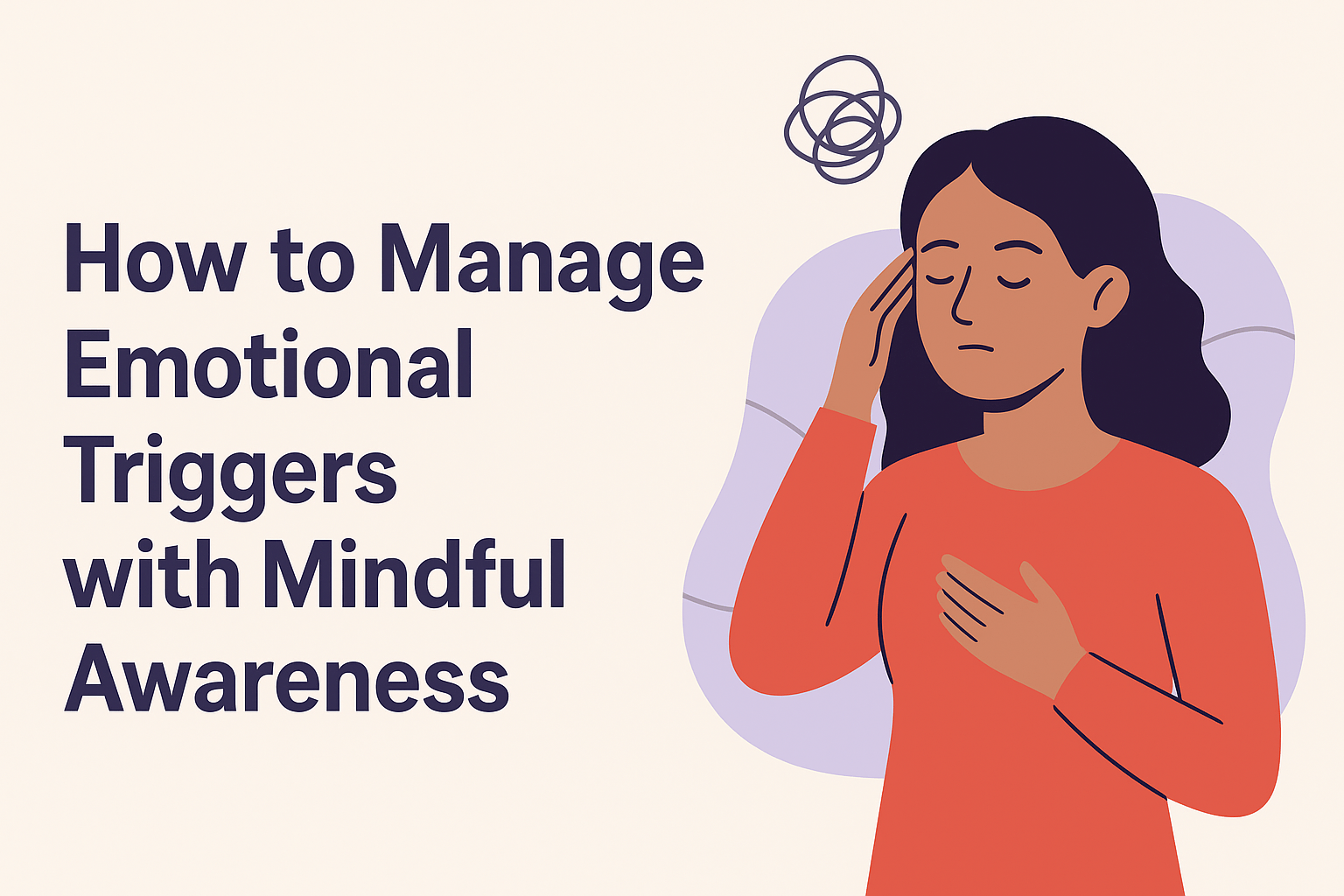
Emotional triggers are those moments when something—a word, a look, a memory, or even a tone of voice—immediately brings an emotional reaction beyond the situation’s actual weight. These reactions might seem sudden, but they often stem from unresolved emotional wounds or past experiences. Learning how to manage emotional triggers effectively can change the way we respond to stress, conflict, and even everyday situations.
Mindfulness offers a transformative way to navigate these emotional storms. It allows us to observe our internal landscape without judgment, helping us respond rather than react.
Understanding Emotional Triggers
An emotional trigger can be anything that reminds us of a deeply rooted emotional experience—often one that has caused pain or discomfort. For example:
-
A comment about your appearance might trigger insecurity.
-
Someone interrupting you may instantly make you feel unvalued.
-
Hearing a specific song may bring back past emotions, both positive and negative.
Triggers aren’t weaknesses. They’re signals—your emotional system telling you that there’s something unresolved inside. Instead of ignoring them, you can use them as a guide to deeper healing.
The Role of Mindful Awareness
Mindfulness is the practice of staying present, fully aware of your thoughts, sensations, and emotions without getting lost in them. When emotional triggers arise, mindfulness gives us the space to respond with patience and consciousness.
Instead of reacting immediately, it helps you:
-
Pause and breathe before reacting.
-
Observe what emotions are rising.
-
Name the feeling rather than be consumed by it.
-
Choose a response rather than letting the emotion take over.
Steps to Manage Emotional Triggers Mindfully
1. Notice the Trigger
The first step is awareness. Pay attention to moments when you feel suddenly upset, anxious, or angry. What just happened? What thought or event led to this feeling?
2. Pause and Breathe
When triggered, your nervous system goes into overdrive. A deep breath signals your brain that you’re safe. Inhale slowly, hold for a moment, exhale fully.
3. Label the Emotion
Ask yourself, “What am I feeling?” Is it anger, fear, shame, or sadness? Labeling the emotion creates distance between you and the feeling.
4. Accept without Judgment
It’s okay to feel triggered. Don’t push the feeling away or shame yourself for it. Accept it with kindness and curiosity.
5. Reflect on the Source
Over time, reflect on where this emotion may come from. Is it tied to past pain, a limiting belief, or fear? Understanding the source is key to healing.
6. Choose a Conscious Response
Instead of reacting impulsively, choose how you want to proceed. It may mean stepping away, communicating calmly, or simply letting the moment pass.
The Journey of Healing
Mindfulness is not a one-time solution—it’s a practice. As you get better at mindfully responding to triggers, you build emotional resilience. You become more empowered, self-aware, and compassionate.
Remember: Your triggers do not define you. They are portals to self-discovery. When you handle them with mindful awareness, you transform not only your reactions but also your entire inner world.
Conclusion
Managing emotional triggers with mindful awareness is one of the most powerful tools for inner peace and emotional balance. Rather than feeling overwhelmed by sudden emotions, mindfulness allows us to observe, understand, and transform those moments into opportunities for growth.
Every trigger is an invitation to heal. When approached with presence and compassion, even our most challenging moments can become pathways to profound peace and clarity.