
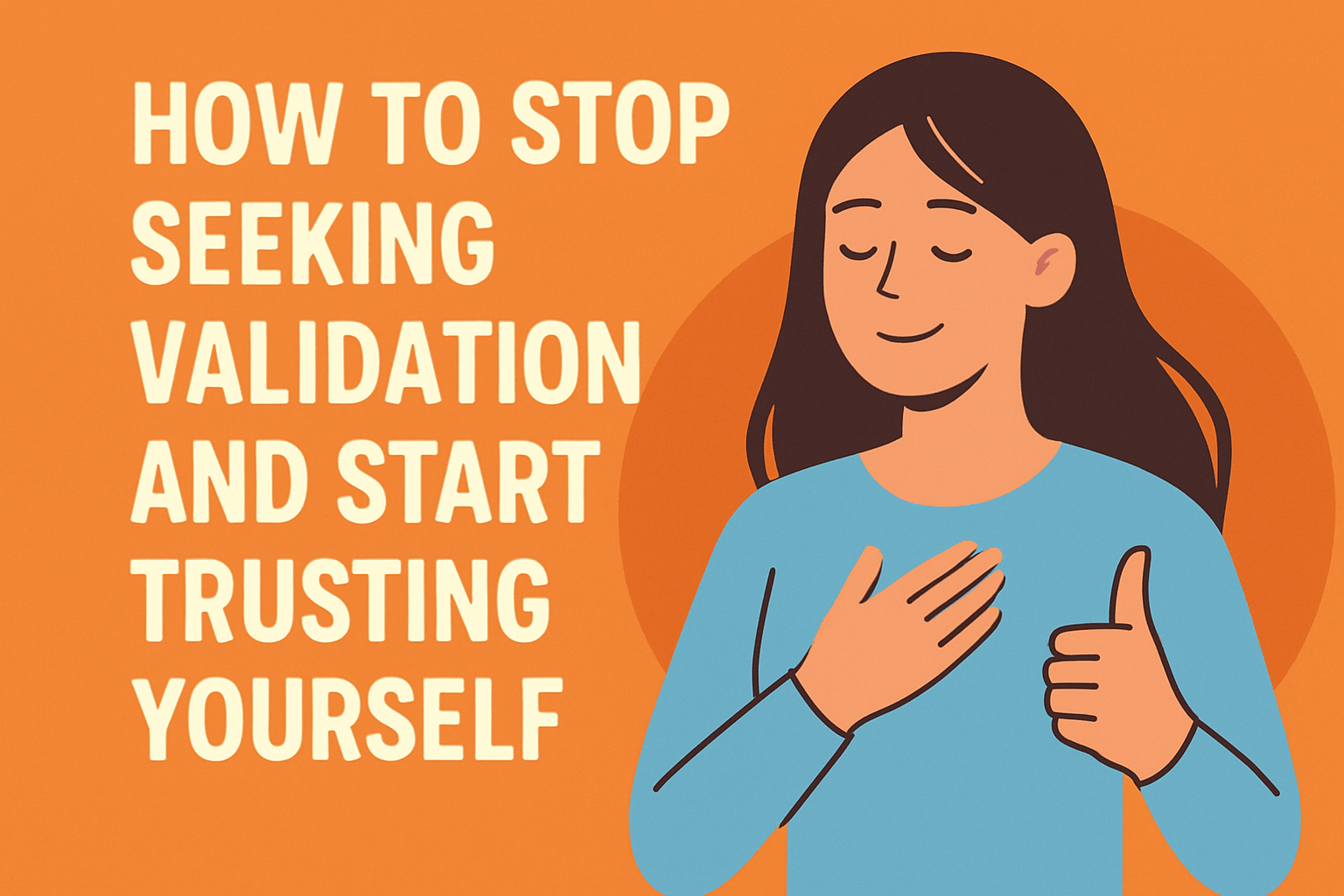
In a world overflowing with opinions, likes, and external expectations, it’s easy to become dependent on others’ approval. Whether it’s praise from your boss, admiration from your friends, or validation through social media, relying too much on external validation can leave you feeling empty, insecure, and disconnected from your true self. But here’s a powerful truth: real confidence comes from within. When you learn to trust yourself, you no longer need constant approval — because you already know your worth.
Why We Seek Validation
There are many reasons why we look outward for validation:
-
Childhood Conditioning: Perhaps praise or criticism shaped how you view your worth.
-
Fear of Rejection: We often conform to gain acceptance and avoid being judged.
-
Low Self-Esteem: When you doubt yourself, others’ approval becomes your measure of value.
-
Social Comparison: Comparing your life to others’ curated versions of themselves often drives the need to fit in.
While validation occasionally feels good, it’s not reliable. External praise is temporary, inconsistent, and often influenced by factors beyond your control. Building self-trust—on the other hand—brings lasting peace and confidence.
What Happens When You Rely on External Approval
-
You may lose your voice: You start prioritizing others’ expectations more than your own desires.
-
Decision-making becomes hard: You make choices based on what people will think rather than what you truly want.
-
Emotional ups and downs: When praise comes, you feel good — but when it doesn’t, you feel lost or rejected.
-
Fear of failure: You avoid taking risks, because failing would mean disappointing others.
To escape this cycle, you need to redirect your focus inward—toward trust, self-awareness, and self-respect.
How to Stop Seeking Validation
1. Practice Self-Awareness
Notice when you’re looking for approval. Ask yourself: Why do I care about this person’s opinion? Is it because I value them or because I fear their judgment? Awareness helps you catch the pattern and choose a different path.
2. Develop Self-Validation
Learn to validate your own feelings, thoughts, and achievements. When you complete a task or face a challenge, consciously acknowledge your effort: “I did this because I cared deeply and worked hard — and that’s enough.”
3. Set Your Standards
Define your values and goals according to what you believe in, not what society expects. When your self-worth is built on your own values, other people’s opinions matter less.
4. Embrace Imperfection
Trusting yourself means accepting that mistakes will happen. You don’t need to be flawless to be worthy. When things go wrong, remind yourself: “I am learning, and it’s okay to grow.”
5. Limit Social Media & Comparison
Reduce your exposure to platforms that trigger comparison. When you catch yourself comparing, pause and ask: Does this comparison serve me or diminish my sense of self?
6. Create Self-Reflection Habits
Spend time journaling, meditating, or simply reflecting on your own. Ask yourself: What do I think about this situation? What do I want to do for me? Getting in touch with your inner voice strengthens self-trust.
7. Build a Supportive Inner Circle
Surround yourself with people who respect and encourage your autonomy. Healthy relationships don’t demand conformity. Instead, they celebrate your authentic self, including your courage to trust you.
The Power of Self-Trust
When you stop chasing validation and start trusting yourself, you unlock a more enduring sense of confidence. Here’s what changes:
-
Greater resilience: You’re less shaken by criticism or praise because your sense of worth doesn’t depend on others.
-
Authentic decisions: Your actions start reflecting your values and desires, not what others expect.
-
Stable self-esteem: Your mood and self-worth don’t fluctuate with external feedback.
-
Freedom: You feel liberated from the need to please — and free to be who you truly are.
Self-trust isn’t about stubbornness. It’s about believing in your inner compass — the one that knows what feels right for you.
Conclusion
Seeking validation is a natural part of being human. But when it becomes your primary source of self-worth, it can hold you back from living a genuine and empowered life. The journey to trusting yourself is not always easy, but it’s deeply worthwhile. By building self-awareness, setting your own standards, and practicing self-compassion, you can break free from the need for external approval and create a life rooted in authenticity.
Trusting yourself is one of the most courageous things you’ll ever do — and it’s where true peace begins.