
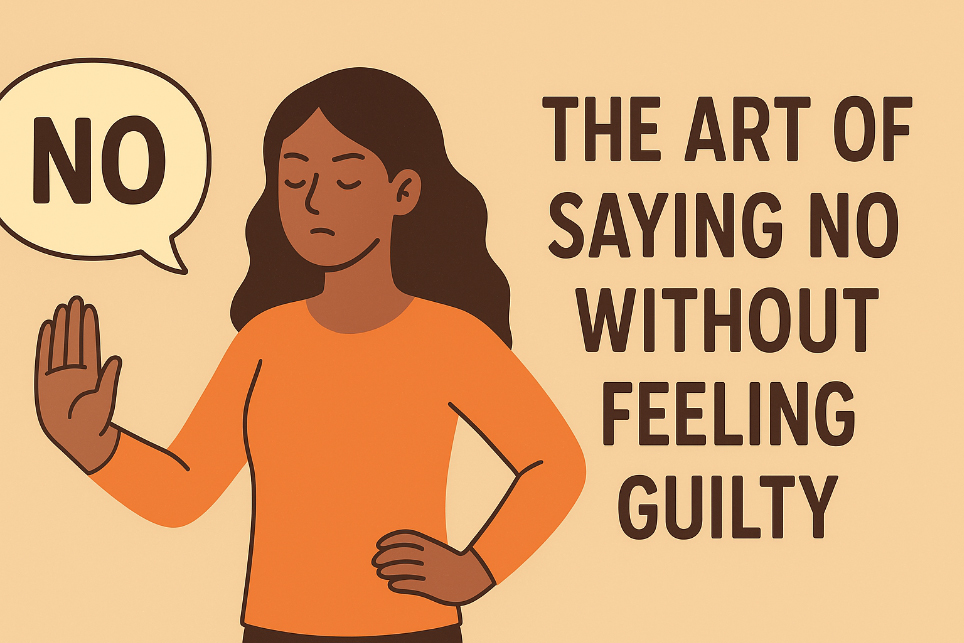
In our efforts to please others friends, family, colleagues we often say “yes” even when we don’t want to or when it stretches us thin. We fear disappointment, rejection, or being judged. But here’s the truth: every time you say “yes” when you want to say “no,” you sacrifice a part of your well-being. Learning to say “no” without guilt is not selfish it’s an act of self-respect, boundary-setting, and inner peace.
Saying “no” with confidence doesn’t mean you have to be harsh, rude, or insensitive. It means you honour your time, energy, and priorities without feeling guilty for protecting them.
Why Saying “Yes” Too Often Can Hurt You
Many of us say yes too often because we want to be liked, accepted, or seen as helpful and supportive. But overcommitment can lead to:
-
Burnout and exhaustion when you spread yourself too thin
-
Resentment because you may feel taken for granted or overwhelmed
-
Loss of personal time and priorities your own dreams, rest, and mental wellness take a backseat
-
Reduced self-worth you indirectly communicate that others’ demands matter more than your own needs
By never saying “no,” you risk losing touch with yourself your boundaries, desires, and peace.
Why Saying “No” Is Healthy and Necessary
Saying “no” is a declaration that you respect your own limits. It helps you:
-
Protect your time, energy, and mental health
-
Focus on what matters most to you your growth, goals, relationships, and self-care
-
Build healthy boundaries and self-respect
-
Communicate honestly and authentically
Healthy relationships personal or professional thrive when boundaries are respected. Saying “no” doesn’t make you unkind; it makes you real, responsible, and self-aware.
How to Say “No” Without Guilt: Practical Steps
1. Be Clear About Your Priorities
Know what matters to you. When you understand your goals, values, and limits, it becomes easier to decide when a “yes” is worth it and when a “no” is necessary.
2. Pause Before You Accept
When someone requests something, take a moment. You don’t need to respond immediately. A simple, “Let me check my schedule and get back to you,” gives you space to decide without pressure.
3. Give a Kind but Firm “No”
You don’t have to justify extensively. A polite “I’m sorry, I can’t right now” is enough. If needed, you can add a brief reason: “I’m focusing on other commitments.”
4. Offer an Alternative (If Appropriate)
If you want to help but cannot commit fully, propose something smaller or easier: “I can’t take this on, but I can help you find someone else.” This shows empathy while protecting your boundaries.
5. Accept That Some People Won’t Understand
Not everyone will appreciate your “no.” Some might feel disappointed or upset. That’s okay. Your wellbeing matters more than others’ momentary discomfort.
6. Practice Self-Compassion
Remind yourself that setting boundaries doesn’t make you selfish. You deserve respect, time, and peace just like anyone else.
7. Reflect & Learn
After saying “no,” observe how you feel. Often, you’ll sense relief, empowerment, or calm. Recognizing this helps reinforce the habit and reduce future guilt.
Common Misconceptions & Why They’re Not True
-
“Saying no means I’m unhelpful.” On the contrary, setting boundaries helps you stay genuine; when you help, you do so wholeheartedly, not resentfully.
-
“If I say no, they’ll reject me.” True relationships respect boundaries; those who don’t probably didn’t respect you in the first place.
-
“I’ll miss opportunities.” Yes, possibly. But every “yes” you decline is permission to say “yes” to better opportunities aligned with your values.
Setting boundaries doesn’t close doors it guides you toward the right ones.
Conclusion: Saying “No” as a Path to Self-Respect and Peace
Saying “no” without guilt is not an act of selfishness; it’s an act of self-love. It means you value your time, energy, and emotional health. It means you respect yourself enough to acknowledge your limits.
When you learn this art, life becomes less chaotic. You prioritize what matters. You create space for growth, peace, and authenticity.
So next time someone asks pause, breathe, and respond with clarity. Say “no” when it’s needed, and feel the freedom that comes from honouring yourself.