
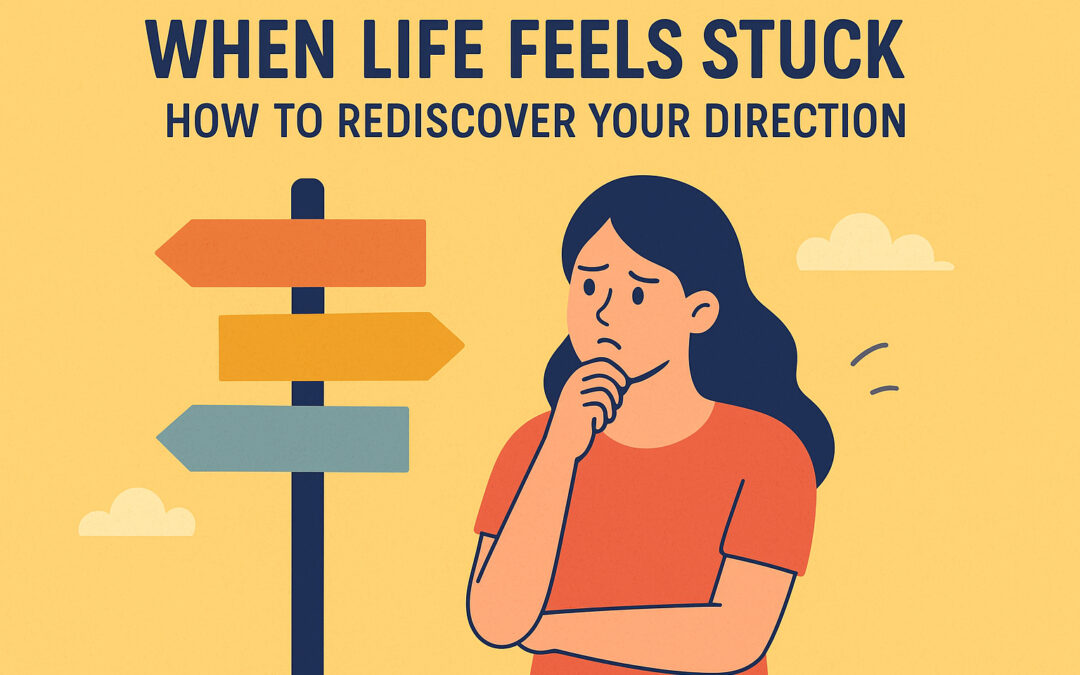
There are times in life when everything appears to slow down — days pass in routine, motivation dries up, and you feel unsure about what’s next. Maybe your career seems stagnant, relationship dynamics feel repetitive, or personal goals seem distant and unclear. In such moments, you might feel stuck — like you’re moving but not progressing. When life feels stuck, it doesn’t mean you’re lost forever. It means you’re being called to pause, reflect, and rediscover your direction.
Feeling stuck is often a signal from within — a gentle (or not-so-gentle) nudge asking you to reassess, reimagine, and reignite. The path forward may not be obvious yet, but that confusion can become the soil where clarity, growth, and purpose take root.
Why We Feel Stuck
Several factors contribute to that heavy, stuck feeling:
-
Monotony and routine: Doing the same things day after day, following habits without conscious purpose, can drain energy and dull enthusiasm.
-
Lack of clarity: Without clear goals or intentions, it’s easy to drift without direction.
-
Fear of change or failure: The unknown feels intimidating, so staying where you are seems safer — even if it’s unfulfilling.
-
External pressures: Social expectations, financial needs, family responsibilities — these may force you into paths that don’t align with your inner values.
-
Burnout or emotional fatigue: Overwork, stress, or unresolved emotions can cloud judgment and drain motivation.
When all these build up, your inner compass gets fogged — and you struggle to find a clear path ahead.
Recognizing the Signs You’re Stuck
Before you can find direction, you need to recognize you’re stuck. Common signs include:
-
Waking up and feeling uninterested or unmotivated about your day
-
Feeling emotionally flat or numb
-
Frequently doubting yourself or your decisions
-
Not feeling excited about your goals or future
-
Repeating the same mistakes or drifting in the same pattern
-
Avoiding risks because fear seems safer than discomfort
Noticing these signs isn’t a sign of weakness — it’s the first step toward change.
Steps to Rediscover Your Direction
1. Pause and Reflect
Give yourself permission to slow down. Spend time alone — with nature, a journal, or meditation — and ask yourself honest questions: What am I feeling right now? What parts of my life feel draining? Where do I feel most alive and fulfilled?
2. Reconnect with Your Values and Passions
List down what truly matters to you: values, experiences, activities that bring joy or a sense of meaning. Your passions — however small — can be clues to a new direction.
3. Set Small, Exploratory Goals
You don’t have to overhaul your life at once. Start small. It could be trying a new course, volunteering, reconnecting with a hobby, or simply reading something inspiring. Small changes spark curiosity and momentum.
4. Experiment and Explore Without Pressure
Treat life as a playground of possibilities. Try writing, painting, learning a skill, volunteering, or traveling. Give yourself freedom to explore without expecting immediate success.
5. Seek New Perspectives
Talk to friends, mentors, or those you admire. Expose yourself to different viewpoints, experiences, or communities. Sometimes, a fresh perspective is all it takes to see a path clearly.
6. Embrace Discomfort as a Sign of Growth
Change often feels uncomfortable. Growth happens at the edge of comfort. When you step into discomfort with awareness, you open doors to new potential.
7. Reevaluate Regularly
Set periodic check-ins for yourself. Reflect on what’s working, what feels off, and adjust accordingly. Life isn’t static — your direction can evolve too.
What Happens When You Rediscover Direction
When you reconnect with purpose and vision, you notice subtle — yet powerful — shifts:
-
You feel more alive, excited, and hopeful about the future.
-
Your choices — small and big — begin to reflect your true self.
-
You make decisions from clarity rather than fear or pressure.
-
You attract opportunities, people, and experiences aligned with your values.
-
You experience deeper satisfaction, fulfillment, and inner peace.
Essentially, rediscovering direction brings you back to yourself — your values, your hopes, your truths.
Conclusion
Feeling stuck doesn’t mean you’re broken or lost. It means you’re human. It means you’re at a crossroads — a chance to pause, reflect, and choose consciously. It’s a gift disguised as discomfort.
So if life feels stuck, don’t panic or rush decisions. Pause. Reflect. Reconnect with your values and passions. Explore small steps. Trust the process. With patience, self-awareness, and courage, you’ll find your way again — maybe not immediately, but surely.
Your path exists. Sometimes you just need to rediscover it.