
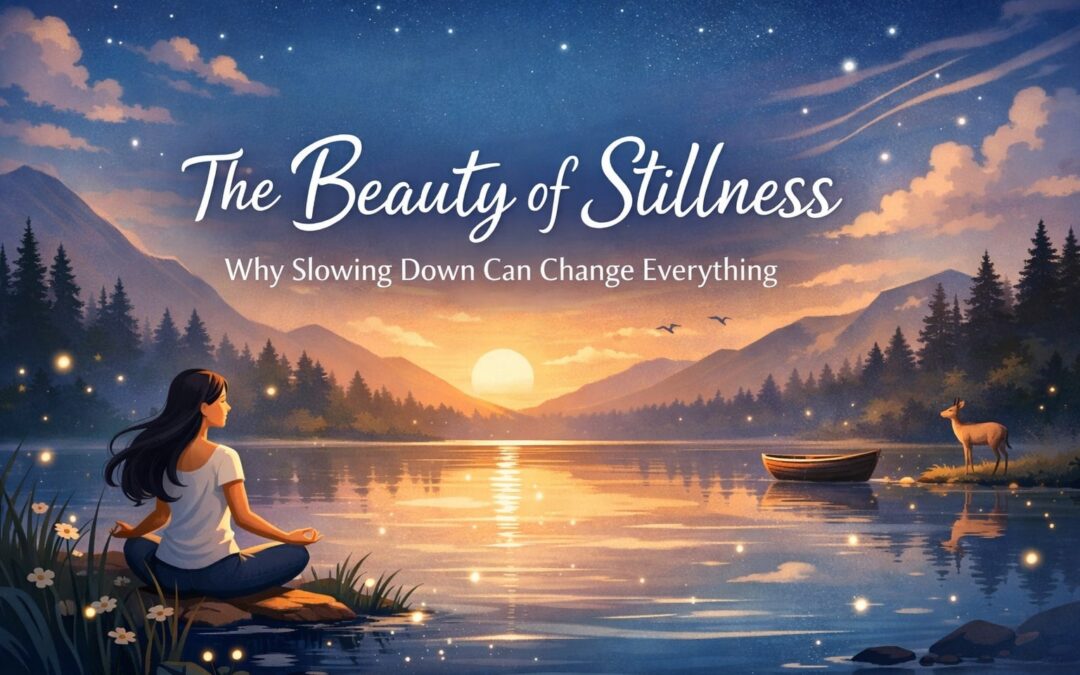
In a world that constantly pushes us to move faster, achieve more, and stay endlessly productive, stillness often feels uncomfortable almost unproductive. Yet, there is profound beauty and power in slowing down. Stillness is not about doing nothing; it is about creating space to reconnect with yourself, your thoughts, and your purpose. When practiced intentionally, slowing down can transform not only how you live but how deeply you experience life.
Modern life glorifies busyness. Our calendars are full, our phones never stop buzzing, and our minds are rarely quiet. Over time, this constant stimulation leads to mental exhaustion, emotional overwhelm, and a sense of disconnection from ourselves. Stillness acts as a gentle pause button, allowing us to breathe, observe, and reset. In those quiet moments, clarity begins to emerge.
One of the greatest benefits of stillness is self-awareness. When you slow down, you begin to notice your thoughts instead of being controlled by them. You recognize patterns what triggers stress, what drains your energy, and what truly matters to you. This awareness is the foundation of emotional healing and personal growth. Without stillness, we often react automatically; with stillness, we respond consciously.
Slowing down also strengthens emotional balance. When life feels rushed, emotions pile up without being processed. Stillness gives emotions permission to surface and release in healthy ways. Whether it’s through mindful breathing, meditation, journaling, or simply sitting quietly, these moments allow the nervous system to relax. As a result, anxiety decreases, patience increases, and inner calm becomes more accessible even during challenging situations.
Creativity thrives in stillness. Many people believe inspiration comes from constant effort, but in reality, creativity flows best when the mind is relaxed. Stillness clears mental clutter and opens space for fresh ideas, insights, and intuition. When you slow down, you allow your inner wisdom to speak often revealing answers you were searching for externally.
Another powerful shift that comes from slowing down is deeper connection. When you are present, your conversations become more meaningful, your relationships more fulfilling, and your experiences richer. Instead of rushing through moments, you begin to fully live them. Stillness teaches you to listen not just to others, but to yourself.
Stillness also changes how you relate to time. Rather than feeling chased by the clock, you begin to experience time as something spacious and supportive. This mindset reduces pressure and helps you approach life with greater ease. You realize that rest is not a reward for productivity; it is a necessity for well-being.
Incorporating stillness into daily life does not require drastic changes. Start small. Pause for a few deep breaths before responding to stress. Spend a few minutes each morning in silence. Take a mindful walk without distractions. These simple practices gradually rewire your relationship with speed and stress.
Ultimately, slowing down is an act of self-respect. It is a reminder that your worth is not measured by how much you do, but by how present you are. Stillness invites you back to yourself to a place of calm, clarity, and inner strength. When you embrace the beauty of stillness, you begin to live with intention rather than urgency, and everything starts to change.