
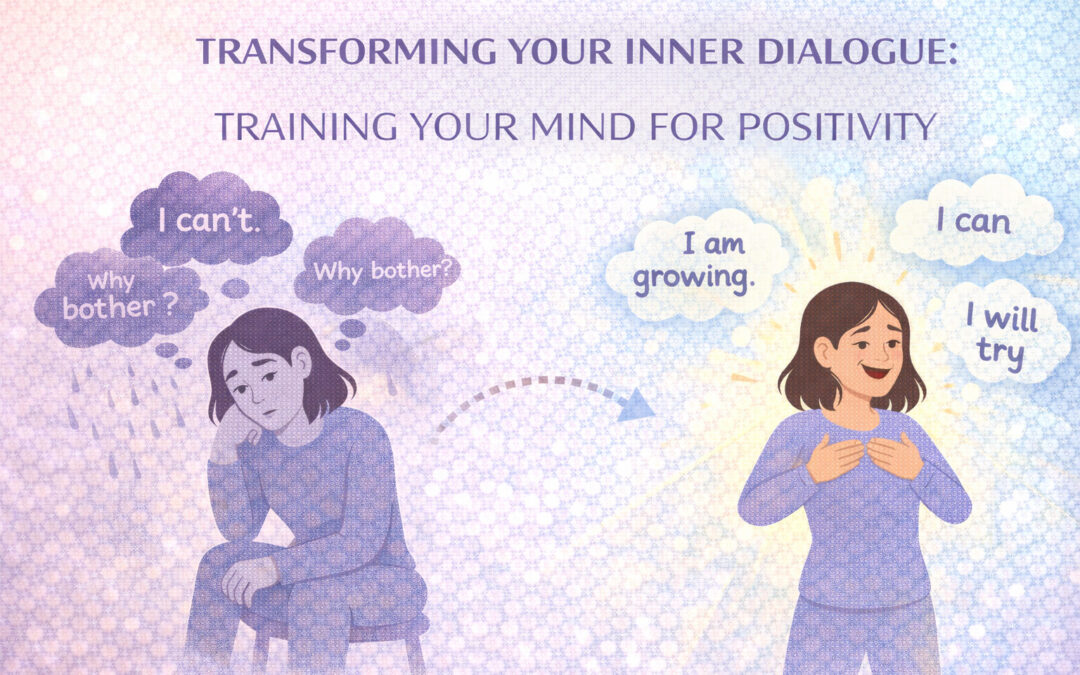
We all carry an inner voice a constant stream of thoughts that shapes how we see ourselves and the world. For many people, this inner dialogue tends to be critical, doubtful, or fear-based. It may whisper things like “I’m not enough,” “I’ll never succeed,” or “Why bother?” Such thoughts may seem harmless, but over time they shape belief systems that limit confidence, joy, and growth.
But here’s an empowering truth: your inner dialogue isn’t fixed. Just like a garden, your mind can be nurtured with positive, helpful thoughts instead of weeds of self-criticism. When you train your mind for positivity, you transform not only your thinking but also your experience of life itself.
Let’s explore how to transform inner dialogue and cultivate a mindset that supports confidence, resilience, and well-being.
What Is Inner Dialogue and Why It Matters
Inner dialogue is the conversation happening inside your head thoughts you say to yourself about your abilities, experiences, relationships, and worth. It’s always active, whether you’re aware of it or not. While some inner talk encourages you, much of it can be automatic and negative, shaped by past experiences, comparisons, and fears.
Your inner dialogue matters because it influences:
-
Your confidence: Negative self-talk weakens belief in yourself.
-
Your motivation: Criticism drains energy; encouragement fuels effort.
-
Your emotional state: Harsh thoughts increase stress and anxiety.
-
Your choices: What you believe internally often dictates what you do externally.
Positive inner dialogue doesn’t deny challenges it reframes them with resilience and clarity. It gives strength when life feels heavy and perspective when self-doubt tries to take hold.
Common Patterns of Negative Inner Talk
Before you transform your inner dialogue, it helps to recognize unhelpful thought patterns. These often include:
1. All-or-Nothing Thinking
“If I can’t do it perfectly, I shouldn’t do it at all.”
2. Catastrophizing
“If this goes wrong, everything else will fall apart.”
3. Personalizing
“It’s all my fault.”
4. Mind Reading
“They think I’m not good enough.”
These patterns amplify fear and diminish hope. Recognizing them allows you to intervene consciously.
Steps to Train Your Mind for Positivity
1. Awareness Without Judgment
The first step is noticing your inner dialogue without fighting it or feeling guilty about it. When a critical thought arises, simply observe:
“Oh, that’s self-doubt speaking.”
By naming the experience, you detach from it and create space to choose a different thought.
2. Challenge Negative Thoughts
Once you recognize a harmful thought, ask:
-
Is this thought true or helpful?
-
What evidence supports it?
-
What evidence contradicts it?
Often, you’ll find the negative assumption was based on fear, not fact.
3. Reframe the Narrative
After challenging a negative thought, replace it with a more balanced one. For example:
| Negative Inner Thought | Reframed Positive Thought |
|---|---|
| “I always fail.” | “I am learning and improving.” |
| “I’m not good enough.” | “I am doing my best and growing every day.” |
Reframing doesn’t ignore reality. It aligns your inner world with compassion and clarity.
4. Use Affirmations Wisely
Positive affirmations help reinforce healthy thinking. But they’re most effective when grounded in truth. For example:
-
“I am capable of handling challenges.”
-
“I learn and grow with every experience.”
-
“My worth isn’t defined by perfection.”
Say them daily, especially during moments of self-doubt.
5. Practice Gratitude and Reflection
Gratitude shifts focus from what’s lacking to what’s abundant. Each day, write down three things you’re grateful for. This simple practice rewires your mind toward positivity and appreciation.
Reflection also helps you acknowledge small wins the subtle progress that often goes unnoticed.
Why This Transformation Matters
Transforming your inner dialogue is not about pretending everything is perfect. It’s about creating a mindset that supports resilience, empathy, and confidence even in the face of setbacks. When your inner voice becomes an ally instead of an adversary, your emotional energy expands, your self-trust deepens, and your actions align more powerfully with your values.
Positive inner dialogue becomes peace-building internal support that guides you, steadies you, and helps you thrive.