
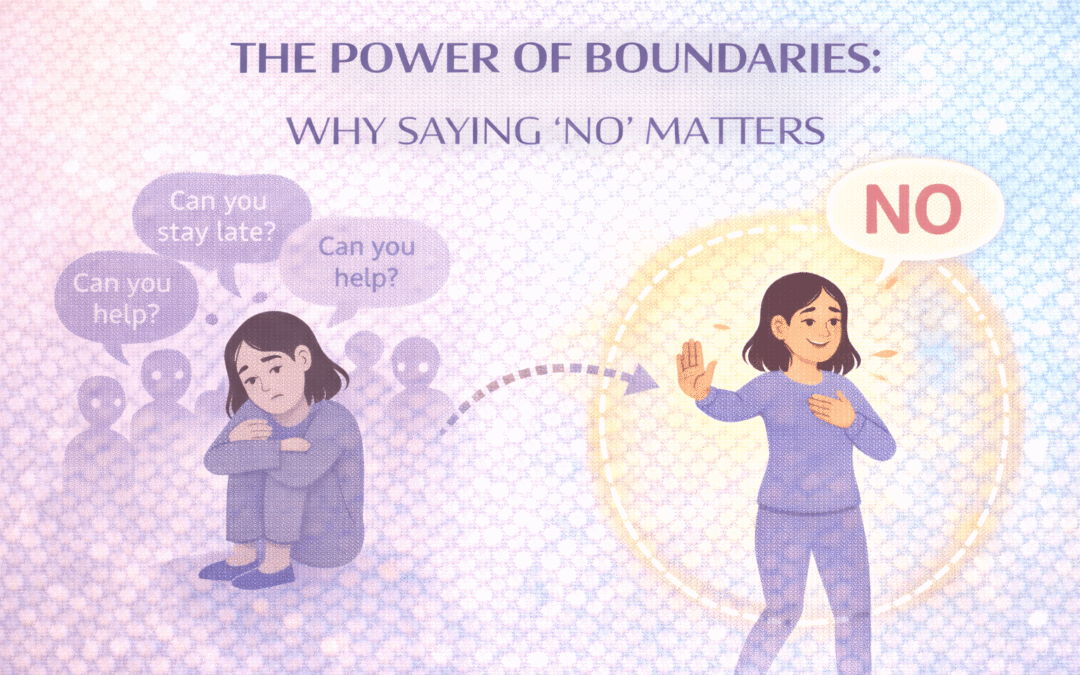
In a world that often praises “yes,” saying no can feel uncomfortable, selfish, or even scary. From family to friends, work to social expectations, we’re frequently encouraged to be agreeable, helpful, and available. But constantly saying yes especially when it doesn’t align with our needs comes with emotional, mental, and physical costs. That’s where boundaries come in.
Boundaries are not walls. They are lines of self-respect that protect your energy, time, and well-being. Saying “no” is not rejection it’s a declaration of self-care, intention, and clarity. Understanding the power of boundaries helps you live with purpose and peace, rather than stress and resentment.
What Are Boundaries Really?
Boundaries are limits you set to define what is acceptable for you in relationships, work, and life. They help you communicate:
-
What you will and will not tolerate
-
What you need to feel safe and respected
-
Where your energy belongs
Healthy boundaries allow you to show up fully not depleted or overwhelmed in the areas that matter most to you.
Boundaries can be physical, emotional, or time-based. For example:
-
Physical boundaries: Personal space and comfort levels
-
Emotional boundaries: How much emotional energy you share
-
Time boundaries: How much of your time you give to others versus yourself
Once you understand what you need, saying “no” becomes an act of empowerment.
Why Saying ‘Yes’ Too Often Harms You
Many people say yes for reasons that seem virtuous: to help, to belong, to avoid conflict, or to feel valued. But without boundaries, this habit often leads to:
1. Emotional Exhaustion
Giving all your energy to others without replenishing leaves little for yourself.
2. Resentment
If you keep agreeing to things you don’t truly want, resentment can build both toward others and yourself.
3. Loss of Identity
When you always put others first, you gradually lose connection with your own needs and dreams.
4. Reduced Effectiveness
Spreading yourself too thin weakens your ability to show up well in the areas that matter most.
Boundaries don’t limit your kindness they ensure your kindness has healthy roots.
The Power of Saying “No”
Saying “no” isn’t about rejection; it’s about prioritization. It tells the world that:
-
You value your time
-
You respect your energy
-
You understand your limits
-
You are committed to your well-being
When you say “no” to something that drains you, you say “yes” to something that nourishes you. Saying “no” protects your:
-
Mental health
-
Emotional balance
-
Physical energy
-
Personal growth
Healthy boundaries help you live actively instead of reactively.
How to Set Boundaries with Confidence
Knowing that boundaries are important is one thing; implementing them is another. Here’s how to start:
1. Know Your Limits
Before you can set boundaries, identify what drains you and what energizes you. Write down areas where you feel overwhelmed or unappreciated.
2. Start Small
Practice saying “no” in low-stake situations. Try simple statements like:
-
“I can’t right now, but thank you for asking.”
-
“I’m not available for that.”
-
“I need some time to think about it.”
Small practices build confidence.
3. Be Clear and Kind
You don’t need to justify or explain excessively. A simple, respectful “no” is enough. For example:
-
“I won’t be able to attend, but I hope you have a great time.”
4. Stay Firm, Not Harsh
Saying “no” with warmth and respect strengthens your boundaries without creating conflict.
5. Reflect and Adjust
Boundaries evolve. Reflect periodically on what’s working and what needs refinement.
Common Misconceptions About Boundaries
“Saying ‘no’ is selfish.”
Not true. Saying “no” to protect your well-being allows you to be more present and generous when you choose to say “yes.”
“People will get mad if I say no.”
Some will, and that’s okay. Healthy relationships respect boundaries.
“I must justify my ‘no’.”
You don’t owe long explanations. A brief, honest answer suffices.
Conclusion: Boundaries Are Self-Respect in Action
Boundaries aren’t barriers; they are bridges to freedom, clarity, and inner peace. When you learn the art of saying “no” with confidence, you stop living on others’ terms and start living on your own. You create space for what truly matters your growth, joy, and purpose.
Remember: your life is not an open invitation it’s a work of intentional design. Saying “no” is one of the most powerful ways to honor that design.