
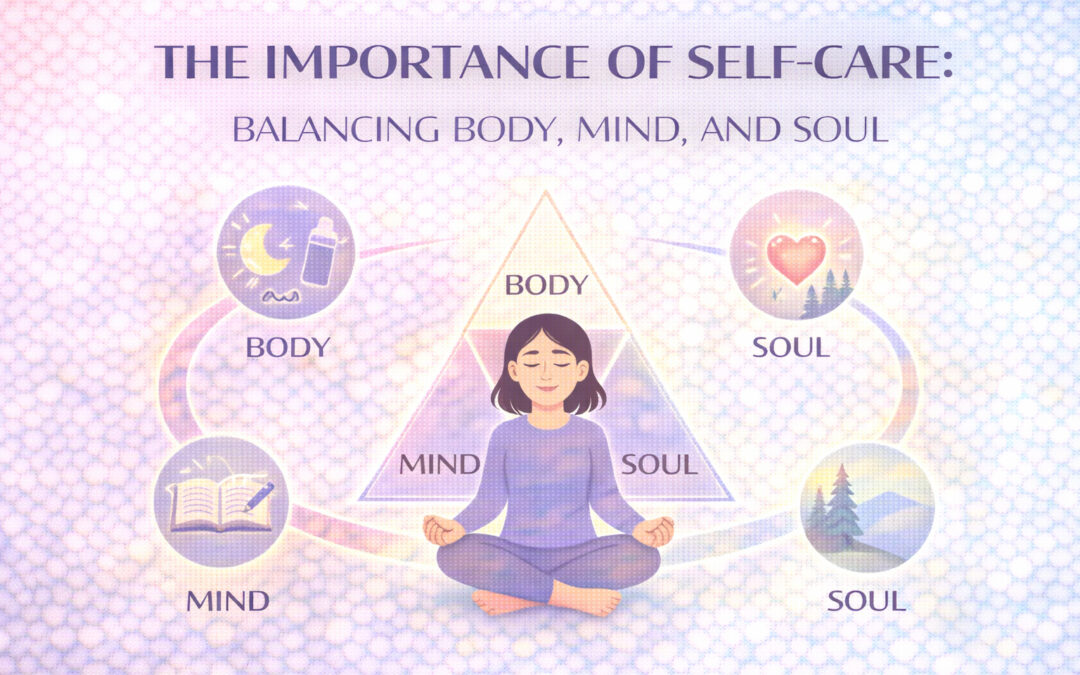
In today’s fast-paced world, self-care is often misunderstood as indulgence or luxury. In reality, self-care is a vital practice that supports overall health, emotional stability, and inner peace. True self-care goes beyond surface-level habits and focuses on creating balance between the body, mind, and soul.
When these three aspects are aligned, life feels more grounded, purposeful, and fulfilling.
What Self-Care Truly Means
Self-care is the intentional practice of nurturing yourself physically, mentally, and emotionally. It’s about listening to your needs and responding with compassion rather than neglect.
Self-care is not selfish. When you care for yourself, you show up more present, patient, and empowered in every area of life.
Caring for the Body: Your Physical Foundation
The body is the vessel through which you experience life. Ignoring physical well-being often leads to fatigue, illness, and emotional imbalance.
Simple Ways to Support Physical Self-Care
Prioritizing restful sleep
Eating nourishing, balanced meals
Staying hydrated
Engaging in regular movement or gentle exercise
When the body is supported, energy levels improve and stress becomes easier to manage.
Nurturing the Mind: Emotional and Mental Well-Being
Mental self-care focuses on how you think, process emotions, and respond to challenges. A cluttered or overworked mind often leads to anxiety, burnout, and self-doubt.
Healthy Mental Self-Care Practices
Practicing mindfulness or meditation
Journaling thoughts and emotions
Setting healthy boundaries
Limiting negative self-talk
A calm and focused mind allows clarity, confidence, and emotional resilience to grow.
Honoring the Soul: Inner Connection and Purpose
Soul care is often overlooked, yet it is the deepest form of self-care. It involves connecting with your inner self, values, and sense of meaning.
Soul care looks different for everyone. It may include:
Spiritual reflection or prayer
Time in nature
Creative expression
Moments of stillness and gratitude
When the soul is nourished, life feels more aligned and fulfilling.
Why Balance Matters More Than Perfection
Many people try to “fix” one area of life while ignoring others. True wellness comes from balance, not perfection. You don’t need to do everything at once—small, consistent actions create lasting change.
Neglecting one area eventually affects the others. For example:
Physical exhaustion impacts mental clarity
Emotional stress affects physical health
Lack of inner fulfillment leads to burnout
Balance creates harmony across all aspects of well-being.
Overcoming Guilt Around Self-Care
Many individuals—especially women—feel guilty for prioritizing themselves. This mindset often stems from people-pleasing tendencies or unrealistic expectations.
Remember:
You cannot pour from an empty cup.
Taking care of yourself allows you to support others from a place of strength rather than depletion.
Creating a Sustainable Self-Care Routine
Self-care does not need to be complicated or time-consuming. Consistency matters more than intensity.
Start by asking yourself:
What does my body need today?
What emotions am I holding onto?
What helps me feel calm and connected?
Build your routine around awareness, not pressure.
Conclusion
Self-care is a lifelong commitment to your well-being. By nurturing your body, calming your mind, and honoring your soul, you create a balanced life rooted in self-respect and inner peace.
When self-care becomes a priority, healing begins naturally—and life starts to feel more intentional, grounded, and fulfilling.