
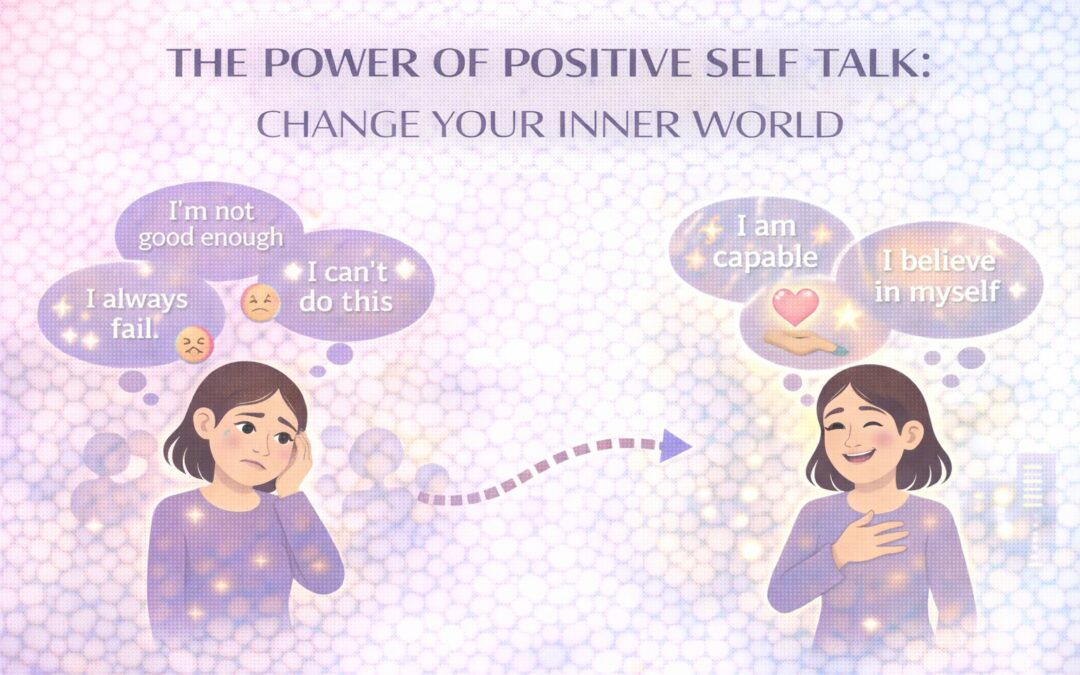
In today’s fast-paced and highly demanding world, the way we talk to ourselves matters more than we often realize. Our inner dialogue shapes our mindset, influences our emotions, and ultimately determines the direction of our lives. Positive self-talk is not about ignoring reality or pretending everything is perfect it is about choosing empowering thoughts that help you grow, heal, and move forward with confidence.
Many people unknowingly engage in negative self-talk. Thoughts like “I’m not good enough,” “I always fail,” or “I can’t do this” become deeply rooted patterns that limit personal growth. Over time, these beliefs create self-doubt, anxiety, and a lack of motivation. The good news is that your inner dialogue is something you can control and transform.
Positive self-talk begins with awareness. You cannot change what you are not aware of. Start by observing your thoughts without judgment. Notice how you speak to yourself during difficult situations or when things don’t go as planned. Are you encouraging yourself, or are you being overly critical? Awareness is the first step toward meaningful change.
Once you become aware of your negative patterns, the next step is to challenge them. Ask yourself whether your thoughts are truly accurate or simply assumptions shaped by fear or past experiences. For example, instead of saying “I always mess things up,” reframe it to “I’m learning and improving with every experience.” This small shift can create a significant difference in how you feel and act.
Another powerful way to build positive self-talk is through intentional affirmations. Affirmations are positive statements that reinforce self-belief and confidence. Repeating phrases like “I am capable,” “I deserve success,” or “I am growing every day” can gradually rewire your mindset. While it may feel unnatural at first, consistency is key. Over time, your brain begins to accept these positive messages as truth.
Your environment also plays an important role in shaping your inner dialogue. Surround yourself with positive influences whether it’s uplifting content, supportive people, or inspiring experiences. When your external environment supports positivity, it becomes easier to maintain a healthy internal conversation.
Practicing self-compassion is another essential element. Life is not about perfection; it’s about progress. Instead of criticizing yourself for mistakes, treat yourself with the same kindness you would offer a friend. Understand that setbacks are part of the journey, not a reflection of your worth. Positive self-talk encourages growth, while negative self-talk keeps you stuck.
Additionally, mindfulness can help you stay present and reduce the impact of negative thoughts. When you focus on the present moment, you create space between yourself and your thoughts. This allows you to respond consciously rather than reacting automatically. Simple practices like deep breathing, journaling, or meditation can help you reconnect with your inner voice and guide it in a positive direction.
The benefits of positive self-talk go beyond mental well-being. It improves confidence, enhances performance, strengthens resilience, and helps you handle challenges more effectively. When you believe in yourself, you are more likely to take action, pursue your goals, and create the life you truly desire.
Changing your inner world is not an overnight process. It requires patience, consistency, and a willingness to grow. But every small step you take toward positive self-talk brings you closer to a more empowered and fulfilling life.
In the end, remember this: the most important conversation you will ever have is the one you have with yourself. Make it supportive, encouraging, and full of belief because you deserve nothing less.