
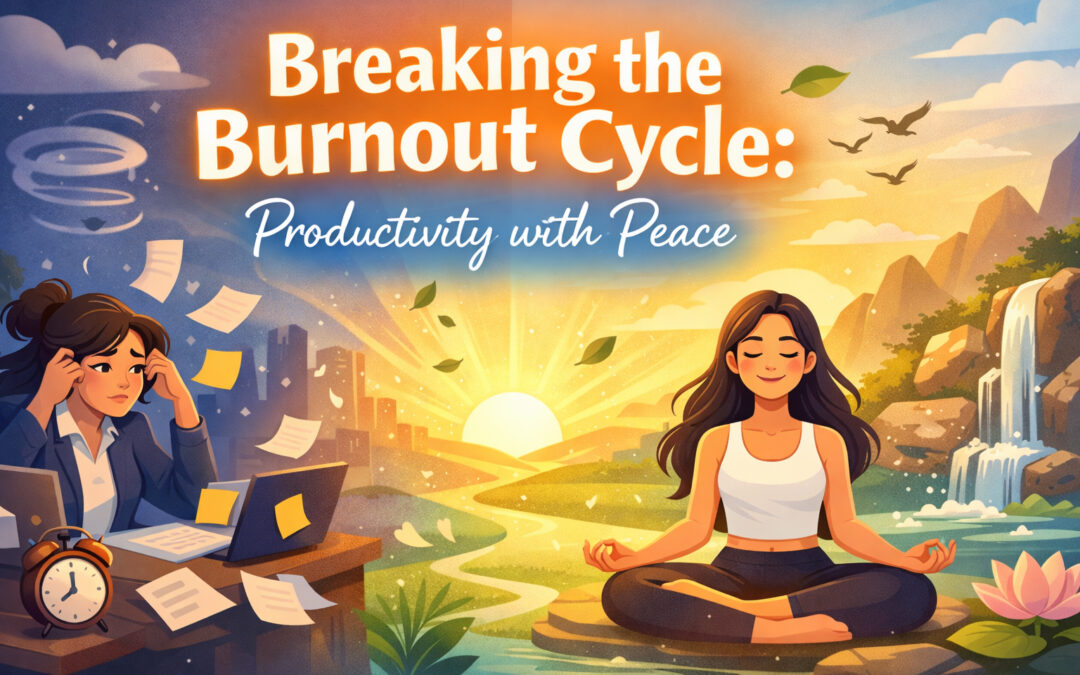
In today’s fast-paced world, the line between productivity and burnout has become increasingly blurred. Many of us push ourselves to the limits, believing that working harder equates to success. Yet, the reality is quite the opposite. Chronic stress and overworking can lead to burnout a state of emotional, mental, and physical exhaustion. Breaking the burnout cycle is essential not only for your well-being but also for sustaining long-term productivity. The key lies in embracing a balanced approach where peace and productivity coexist.
Understanding Burnout
Burnout is more than just feeling tired. It manifests as chronic fatigue, lack of motivation, irritability, and sometimes even physical symptoms like headaches or digestive issues. According to research, individuals experiencing burnout often see a decline in performance despite investing more hours into their work. Recognizing the early signs of burnout is the first step toward regaining control over your life and productivity.
Why Productivity Doesn’t Mean Overworking
Many people equate productivity with constant activity. However, true productivity comes from efficiency, focus, and clarity of mind not endless work hours. Working relentlessly without pause leads to diminishing returns and a decrease in creativity and decision-making capabilities. By integrating periods of rest, reflection, and mindful activity into your routine, you can achieve more in less time while preserving your mental and emotional health.
Strategies to Break the Burnout Cycle
-
Prioritize Self-Care
Self-care isn’t a luxury it’s a necessity. Establish a routine that includes adequate sleep, nutritious meals, and physical activity. Even short breaks during work can recharge your mind, helping you stay focused and productive without feeling drained. -
Set Boundaries
One of the main contributors to burnout is the inability to say no. Learn to set boundaries in both personal and professional life. Communicate your limits clearly and protect your time. This practice prevents overcommitment and helps maintain mental clarity. -
Mindfulness and Meditation
Incorporating mindfulness techniques, such as meditation or deep-breathing exercises, helps calm the mind and reduce stress. Even a few minutes of mindfulness practice daily can significantly improve focus, emotional resilience, and overall productivity. -
Work Smarter, Not Harder
Focus on tasks that provide the most value and consider delegating less critical responsibilities. Using productivity tools, scheduling tasks strategically, and breaking work into manageable chunks can prevent overwhelm and increase efficiency. -
Reconnect with Purpose
Sometimes burnout stems from losing sight of why we do what we do. Reflect on your goals and align your daily activities with your core values. When your work feels meaningful, productivity flows naturally without sacrificing peace of mind.
Creating a Culture of Balance
Whether you’re an individual or a team leader, fostering a culture that values balance over relentless hustle is crucial. Encourage regular breaks, support mental health, and celebrate achievements not just the output. When peace is prioritized alongside productivity, burnout becomes less likely, and sustainable success becomes achievable.
Conclusion
Breaking the burnout cycle is about reclaiming your time, energy, and peace of mind. By integrating self-care, setting boundaries, practicing mindfulness, and working strategically, you can enhance your productivity without sacrificing your well-being. Remember, productivity with peace isn’t just a choice it’s a lifestyle that empowers you to achieve your goals sustainably while maintaining inner harmony.