
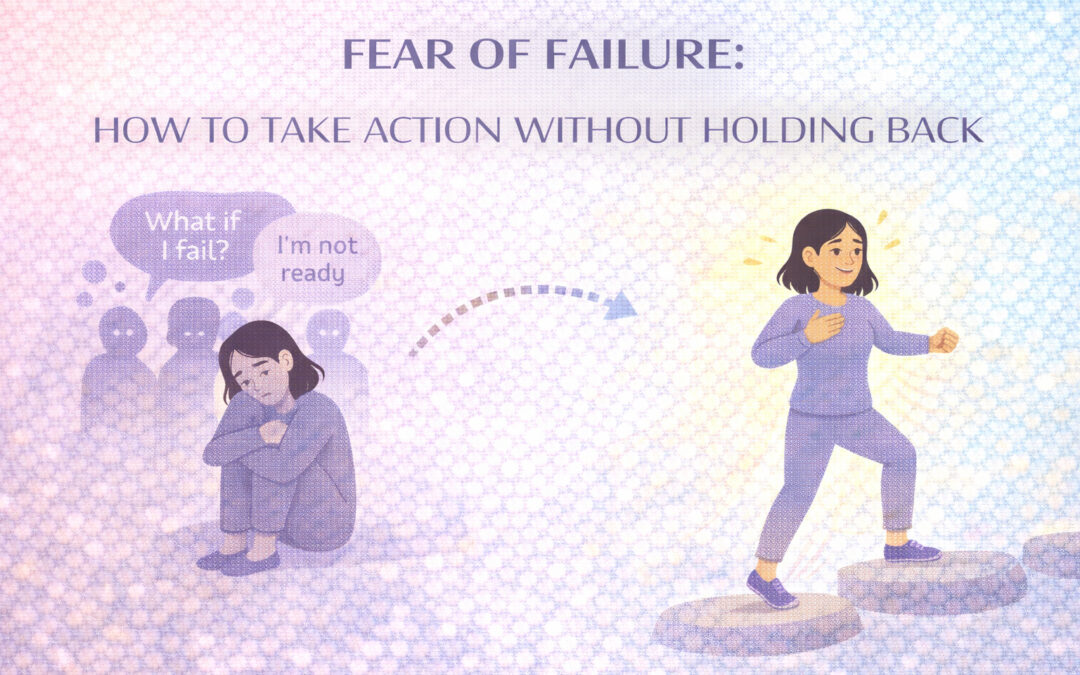
Fear of failure is something nearly everyone experiences. Whether you’re starting a new job, launching a project, learning a skill, or pursuing a dream that little voice inside your head often whispers: “What if I fail?” That fear can feel powerful, convincing you to play it safe, delay action, or avoid challenges altogether. But here’s the truth: fear of failure doesn’t mean you shouldn’t take action it means you’re on the edge of growth. The key is not eliminating fear, but learning how to take action despite it.
Let’s explore how you can transform fear of failure into a force that motivates you, rather than paralyzes you.
Why Fear of Failure Holds Us Back
At its core, fear of failure comes from one main source: the discomfort of feeling judged, inadequate, or vulnerable. We worry about what others will think, how our self‑worth might be affected, or whether failure will confirm negative stories we tell ourselves. Our brain is naturally wired to avoid pain and protect survival and though modern challenges don’t threaten our physical safety, they still trigger that primal response.
When fear dominates decision‑making, it looks like:
-
Endless procrastination
-
Self‑doubt and second‑guessing
-
Avoiding new opportunities
-
Limiting ambition
-
Staying in comfort zones
But the danger isn’t failure itself it’s letting the fear of failure stop you from trying.
Reframing Failure as Feedback
One of the most powerful shifts you can make is to redefine failure not as a verdict, but as feedback. Real failure isn’t trying and not succeeding it’s not trying at all. Everyone who has ever achieved something meaningful has encountered setbacks. What separates those who grow from those who give up is not the absence of failure, but the ability to learn and adapt.
When you fail:
-
You learn what doesn’t work
-
You refine your approach
-
You build resilience
-
You gain insight into yourself
Instead of asking, “Did I fail?” ask: “What can I learn from this?” This subtle mindset shift transforms fear into curiosity.
Steps to Take Action Without Holding Back
1. Identify the Real Fear
When you feel stuck, pause and reflect: What exactly am I afraid of?
Is it:
-
Fear of judgment?
-
Fear of not being good enough?
-
Fear of embarrassment?
Naming the fear helps you see it clearly, making it easier to challenge it.
2. Set Small, Achievable Steps
Big goals can feel overwhelming because the pathway to success looks undefined. Break your tasks into small, manageable actions. Instead of “I want to be confident,” try:
-
“Today, I will speak up once in a meeting.”
-
“This week, I’ll practice for 10 minutes.”
Small steps build confidence over time.
3. Acknowledge Fear Without Letting It Rule You
Fear is not something you must eliminate it’s something you can acknowledge and move forward with. When you feel fear rising, say to yourself:
“I notice I’m afraid, and I’m still going to act.”
This gentle acknowledgment gives the fear a name without letting it control your decisions.
4. Prepare for the Possibility of Mistakes
Accept that mistakes are part of the learning process. When you prepare mentally for errors, they no longer feel like catastrophes. A mistake becomes data information you can use to improve.
5. Celebrate Effort Not Just Results
If you only celebrate outcomes, you train your brain to fear outcomes that feel uncertain. Instead, celebrate effort, courage, and persistence. Praise yourself for:
-
Showing up
-
Trying something new
-
Staying consistent
-
Learning something difficult
When effort becomes your measure of success, fear loses its power.
Building Resilience Through Action
The more you act despite fear, the more your confidence grows. With each step, you prove to yourself that fear is not a barrier it’s a sensation you can feel without being controlled by it. Courage isn’t the absence of fear; it’s acting in the presence of fear.
Action builds momentum. Momentum builds belief. Belief builds strength. And strength helps you take the next step, again and again.
Conclusion: Fear Is a Signal, Not a Stop Sign
Fear of failure doesn’t mean you shouldn’t act it means you’re on the brink of growth. When you learn to take action despite fear, you unlock opportunities you never thought possible. You understand that setbacks are not the end of the story, but chapters in your journey.
Let fear be your guide, not your gatekeeper. Don’t let fear stop you from living, creating, learning, and growing. Step forward with courage not because fear disappears, but because you choose growth over comfort.