
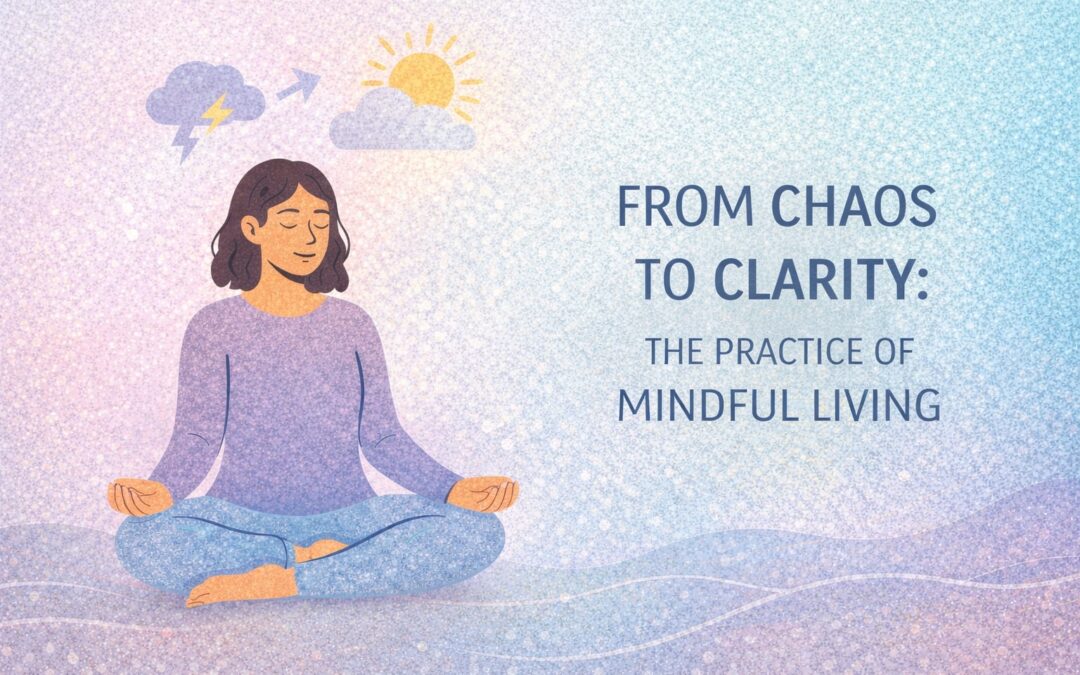
Life often feels overwhelming, filled with endless responsibilities, distractions, and conflicting emotions. In this constant whirlwind, it’s easy to feel lost, exhausted, or disconnected. Yet, clarity is not impossible it can be cultivated through the deliberate practice of mindful living. Mindfulness helps you transform chaos into a calm, focused, and intentional life, allowing you to navigate challenges with greater ease and confidence.
The first step in mindful living is awareness. Most of us move through life on autopilot, reacting to situations without pausing to reflect. Mindful awareness encourages you to notice your thoughts, emotions, and surroundings without judgment. By observing rather than reacting, you create space for intentional decision-making instead of impulsive responses.
Chaos often stems from an overactive mind racing thoughts about the past, worries about the future, or an endless to-do list. Mindful practices, such as meditation, deep breathing, or journaling, slow down mental noise and anchor you in the present moment. By focusing on the here and now, you can see situations more clearly, understand your true priorities, and make choices aligned with your values.
Another critical aspect of mindful living is accepting imperfection. Life rarely unfolds exactly as planned, and resisting this truth creates unnecessary stress. Mindfulness teaches that difficulties, setbacks, and unexpected changes are natural. Rather than fighting them, you learn to acknowledge reality, adjust your actions, and respond with calm clarity. This acceptance reduces anxiety and fosters emotional resilience.
Practical mindfulness also includes creating structured moments of reflection. Daily pauses even five minutes in the morning or evening help you process emotions, organize thoughts, and reconnect with yourself. During these pauses, ask yourself questions like: “What matters most today?” or “How do I want to respond to this challenge?” These reflections transform reactive patterns into conscious choices.
Mindful living extends to your physical environment as well. Decluttering your space, simplifying routines, and minimizing distractions contribute to mental clarity. A clean, organized environment mirrors the clarity you seek internally. Even small acts, like turning off unnecessary notifications or setting boundaries around work, can have a profound impact on your focus and well-being.
Self-compassion is another cornerstone of mindfulness. When life feels chaotic, it’s common to criticize yourself for perceived mistakes or shortcomings. Mindful living encourages gentleness and understanding. By speaking to yourself with kindness and patience, you cultivate emotional stability and confidence, allowing you to move through challenges with grace.
Consistency is key. Mindfulness is not a one-time practice but a lifestyle shift. Over time, integrating mindful habits strengthens your ability to respond calmly, think clearly, and act intentionally. The chaotic noise of life no longer dictates your experience; instead, your awareness becomes the compass guiding you toward clarity, purpose, and fulfillment.
In essence, moving from chaos to clarity is about creating space space to breathe, observe, reflect, and act consciously. By practicing mindfulness, you nurture a calm mind, resilient emotions, and a purposeful approach to daily life. The journey may require patience, but the rewards inner peace, focus, and clarity are transformative.