
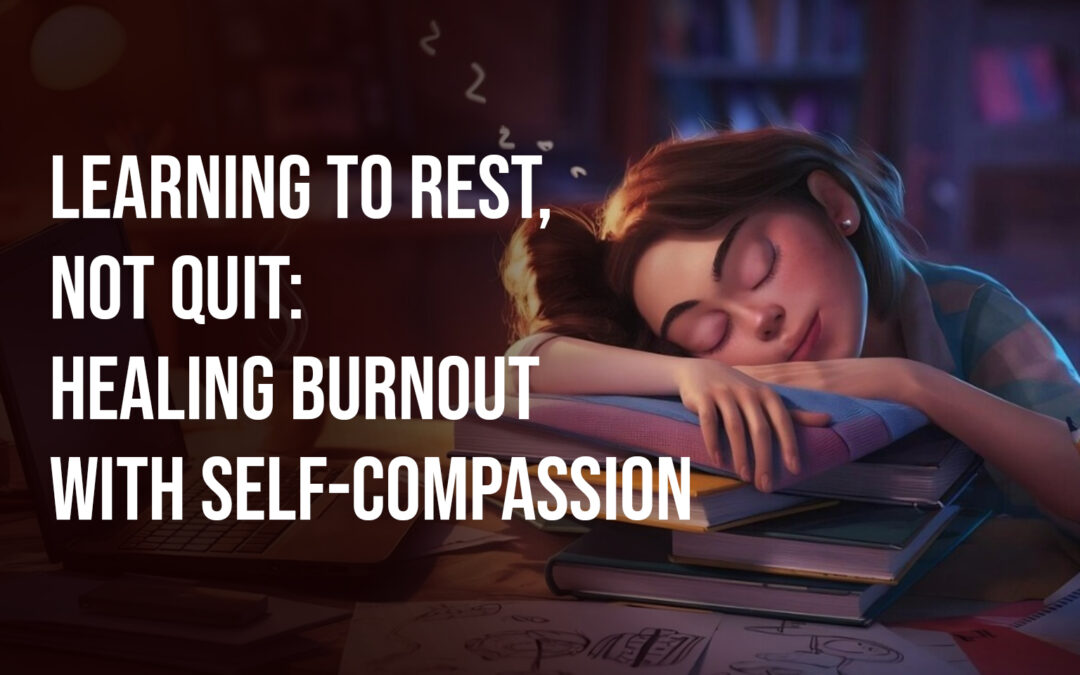
In today’s fast-paced world, burnout has become increasingly common. Many people push themselves beyond their limits, believing that rest equals weakness and quitting equals failure. When exhaustion sets in, the inner critic often becomes louder, telling us we are not doing enough or not strong enough. However, healing burnout is not about quitting life or responsibilities it is about learning to rest with self-compassion.
Burnout is more than physical tiredness. It is emotional depletion, mental overwhelm, and a deep sense of disconnection from joy and purpose. When you are burned out, even simple tasks can feel heavy. Motivation fades, creativity shuts down, and self-doubt takes over. Instead of listening to what your body and mind are asking for, many people respond by pushing harder, which only deepens the cycle.
Self-compassion offers a different path. It invites you to slow down and treat yourself with the same kindness you would offer someone you care about. Rather than judging yourself for feeling exhausted, self-compassion encourages understanding. It reminds you that rest is not a reward you earn it is a basic human need.
One of the biggest myths around burnout is that rest means giving up. In reality, rest is an act of strength. It is a conscious decision to pause so that you can continue with clarity and balance. Rest allows your nervous system to regulate, your mind to reset, and your emotions to settle. Without rest, healing is not possible.
Learning to rest begins with listening inward. Notice the signals your body sends chronic fatigue, irritability, lack of focus, or emotional numbness. These are not signs of laziness; they are messages asking for care. When you honor these signals instead of ignoring them, you create space for recovery.
Self-compassion also means letting go of unrealistic expectations. Burnout often stems from constantly trying to meet external standards or prove worth through productivity. Healing requires redefining success. Some days, success may simply mean getting enough sleep, setting boundaries, or saying no without guilt. These small acts of care rebuild trust with yourself.
Mindful rest is especially powerful. This could mean stepping away from screens, practicing gentle breathing, journaling, or spending time in silence. The goal is not to escape life, but to reconnect with yourself. When rest is intentional, it becomes restorative rather than passive.
Another important aspect of healing burnout is releasing shame. Many people feel embarrassed about needing rest, comparing themselves to others who appear to be “handling everything.” But burnout is not a personal failure it is a natural response to prolonged stress without adequate support. Self-compassion helps dissolve this shame and replace it with acceptance.
Over time, resting without guilt strengthens emotional resilience. You begin to respond to life instead of constantly reacting. Energy slowly returns, clarity improves, and purpose feels accessible again. Most importantly, you learn that you do not need to abandon yourself to succeed.
Learning to rest, not quit, is a lifelong practice. With self-compassion as your guide, burnout becomes an opportunity to realign, heal, and rebuild a life that feels sustainable. Rest does not mean stopping it means choosing yourself so you can move forward with greater awareness and inner peace.