
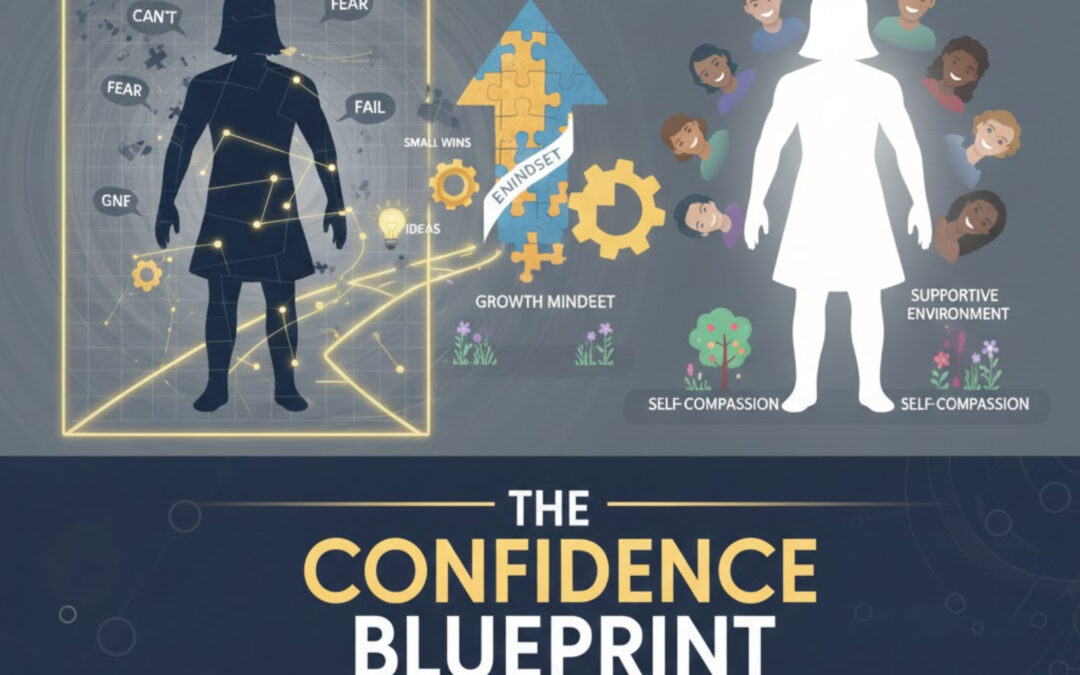
Have you ever felt like you’re standing in your own way? That quiet voice in your head whispering “I’m not good enough” or “What if I fail?” is more common than you think. However, confidence isn’t a gift some people are born with and others aren’t. It is a skill—a muscle that you can build with the right tools.
Welcome to The Confidence Blueprint, your comprehensive guide to dismantling self-doubt and constructing a foundation of unshakable self-esteem.
Step 1: Understand the Root of Your Self-Esteem
Before you can build, you must understand the ground you’re standing on. Self-esteem is the internal compass of how we value ourselves. It is often shaped by past experiences, childhood upbringing, and societal pressures.
To start your blueprint, take a moment to reflect. Are your negative thoughts truly yours, or are they echoes of someone else’s criticism? Recognizing that self-doubt is often a “learned behavior” is the first step toward unlearning it.
Step 2: Silence Your Inner Critic
We all have an inner critic, but for those with low self-esteem, that critic is often a bully. The blueprint requires you to “challenge the narrative.”
When you think, “I can’t do this,” immediately counter it with, “What if I can?” or “I have handled difficult things before.” Practicing positive affirmations might feel strange at first, but over time, you are literally rewiring your brain to recognize your worth.
Step 3: The Power of Small Wins
Confidence is built on the evidence of ability. If you set massive, unattainable goals, you set yourself up for perceived failure, which tanks your self-esteem.
Break your goals into “micro-goals.” Want to be a better public speaker? Start by speaking up once in a small meeting. Want to get fit? Start with a 10-minute walk. Every time you complete a small task, you provide your brain with evidence that you are capable and reliable.
Step 4: Audit Your Environment
You cannot heal in the same environment that made you sick. Look at your social circle and your digital consumption. Are you following people on social media who make you feel “less than”? Are your friends supportive or do they constantly pull you down?
Building self-esteem requires a supportive “scaffolding.” Surround yourself with people who celebrate your growth and consume content that inspires rather than diminishes you.
Step 5: Embrace Imperfection (The Growth Mindset)
Perfectionism is the enemy of confidence. When you aim for perfection, any mistake feels like a catastrophe. Shift your focus toward a Growth Mindset.
Understand that failure is not the opposite of success; it is a part of it. When things don’t go as planned, ask yourself: “What did I learn from this?” This shifts the power from the “outcome” to the “process,” making you more resilient.
Step 6: Practice Self-Compassion
Treat yourself like you would treat a best friend. If your friend made a mistake, would you call them “useless”? Probably not. You would offer support and encouragement.
Building self-esteem isn’t about being “better” than others; it’s about being kind to yourself. Self-care, setting boundaries, and saying “no” when you’re overwhelmed are all vital components of your confidence blueprint.
Conclusion
Building self-esteem is not an overnight transformation. It is a daily practice of choosing yourself. By following this blueprint—silencing your critic, celebrating small wins, and embracing growth—you will slowly but surely see a change in how you carry yourself.
At Reform with Afsana, we believe that everyone has the power to reinvent themselves. You are worthy of the life you imagine. Start building today.