
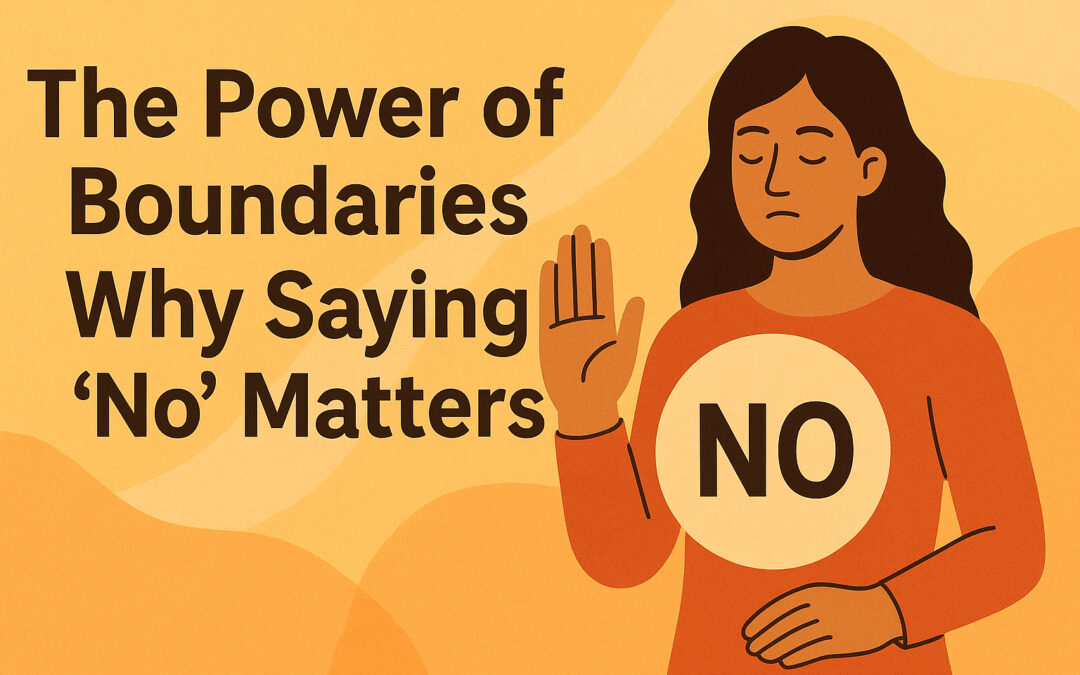
In today’s fast-paced world, saying “yes” has almost become a reflex. We often overcommit, trying to please others or prove our worth. But constantly agreeing to requests without considering our own needs can lead to burnout, stress, and resentment. This is where the power of boundaries comes in. Learning to say “no” is not about being selfish; it’s about protecting your time, energy, and mental well-being.
Why Boundaries Are Essential
Boundaries act as invisible lines that define what you are willing to accept in your personal and professional life. They help you:
-
Protect your time and energy
-
Maintain healthy relationships
-
Reduce stress and avoid burnout
-
Foster self-respect and confidence
Without boundaries, people may take advantage of your kindness, and you might find yourself overwhelmed by obligations that don’t align with your values or priorities.
The Fear of Saying ‘No’
Many struggle with saying “no” because they fear conflict, rejection, or disappointing others. Society often rewards those who are always agreeable, making it seem like saying “no” is negative. However, saying “yes” when you truly want to say “no” can create long-term problems, including resentment, guilt, and even mental health issues.
How Saying ‘No’ Empowers You
When you set boundaries and learn to say “no,” you regain control over your life. Here’s how it helps:
-
Clarity in Priorities: Saying “no” allows you to focus on what truly matters to you.
-
Improved Relationships: Healthy boundaries prevent resentment and ensure your relationships are based on mutual respect.
-
Self-Respect: Honoring your own needs teaches others how to treat you.
-
Mental Health: Reducing overcommitment leads to less stress and more peace of mind.
Practical Tips for Saying ‘No’
Be Direct and Polite: A simple “I’m sorry, I can’t commit to this right now” is enough.
Offer Alternatives: If possible, suggest another solution without compromising your boundaries.
Know Your Priorities: Before committing, evaluate whether the request aligns with your values and goals.
Practice Self-Awareness: Understand your limits and recognize when saying “yes” is truly harmful.
Stay Firm: You don’t need to over-explain or justify your decision. A clear, respectful “no” is enough.
Setting Boundaries in Different Areas of Life
-
Work: Avoid burnout by setting limits on workload and availability.
-
Family: Respect your own needs while balancing family responsibilities.
-
Friendships: Ensure your friendships are mutually supportive and not one-sided.
-
Social Media: Limit exposure to negativity and information overload.
Conclusion
Boundaries are a form of self-love. They allow you to live authentically, maintain mental and emotional well-being, and cultivate healthier relationships. Saying “no” is not rude or selfish—it’s a necessary skill for a balanced life. Start small, practice regularly, and notice the positive impact it brings to your personal and professional life. Remember, every “no” you say is a “yes” to your peace, priorities, and purpose.