
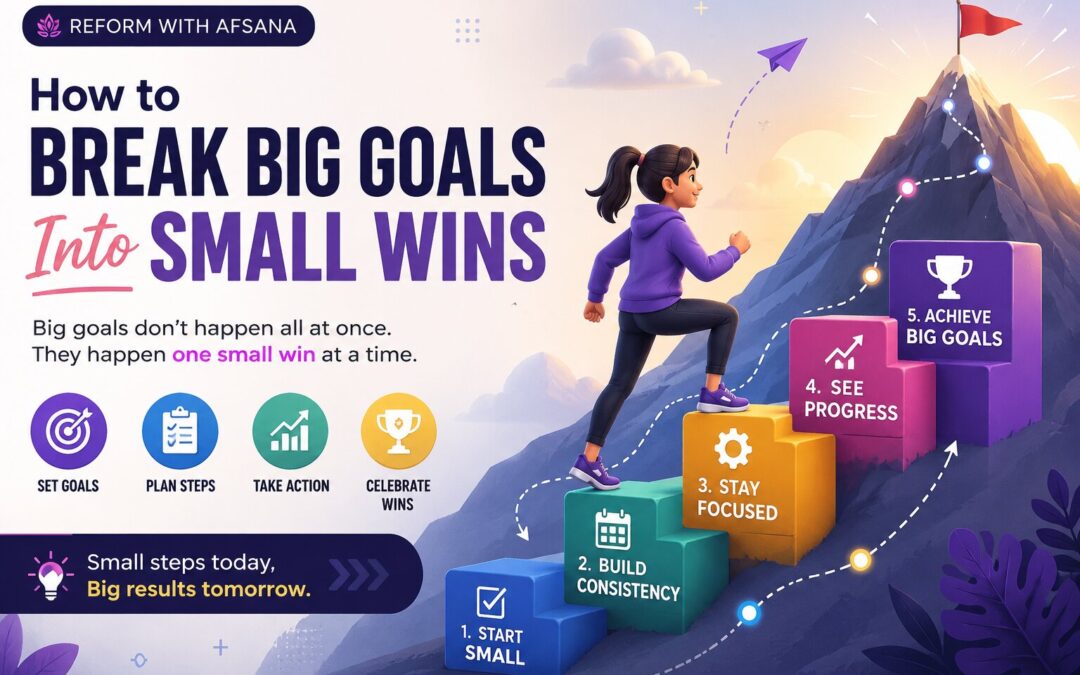
Big goals often feel exciting at first, but they can quickly become overwhelming when you don’t know where to start. Whether you want to build a business, lose weight, improve your skills, or change your lifestyle, the gap between “where you are” and “where you want to be” can feel too large.
The secret to achieving any big goal is not motivation alone it’s breaking it down into small, manageable wins. These small wins create momentum, build confidence, and make progress feel natural instead of forced.
Why Big Goals Fail Without Structure
Most people fail not because their goals are unrealistic, but because they lack structure. A big goal without a plan feels like a mountain without a path.
Common reasons goals fail include:
- Lack of clarity on the first step
- Overwhelming expectations
- No tracking system for progress
- Losing motivation quickly
- Trying to do everything at once
When your brain sees a task as too large, it delays action. That’s why breaking goals into smaller steps is essential
Step 1: Define Your Big Goal Clearly
Before breaking anything down, you need absolute clarity. Instead of saying “I want to be fit,” define it like:
“I want to lose 10 kg in 4 months by exercising and improving my diet.”
Clear goals give direction. Without clarity, even small steps feel confusing.
Step 2: Break It Into Milestones
Now divide your main goal into milestones. These are medium-sized achievements that guide your journey.
For example:
- Month 1: Build workout routine
- Month 2: Improve diet consistency
- Month 3: Increase intensity
- Month 4: Reach target weight
Milestones make big goals feel structured and achievable.
Step 3: Turn Milestones Into Daily Actions
This is where real transformation happens. Every milestone should break down into daily or weekly tasks.
For example:
Instead of “get fit,” your daily actions could be:
- 30-minute walk
- 20 minutes strength training
- Drink 2–3 liters of water
- Avoid junk food 5 days a week
Small daily actions build powerful long-term results.
Step 4: Focus on Consistency, Not Perfection
One of the biggest mistakes people make is expecting perfection. Progress is more important than perfection.
Even if you complete 70% of your plan, you are still moving forward. Small wins compound over time, creating massive results.
Step 5: Track Your Progress
Tracking gives you visibility and motivation. When you see progress, your brain releases satisfaction, encouraging you to continue.
You can track using:
- Journals
- Mobile apps
- Checklists
- Weekly reviews
Simple tracking builds discipline.
Step 6: Reward Small Wins
Rewards reinforce behavior. Every small achievement deserves recognition.
For example:
- Completing a week of workouts → enjoy a cheat meal
- Finishing a project milestone → take a break or watch a movie
Rewards keep motivation alive.
Common Mistakes to Avoid
- Setting unrealistic timelines
- Ignoring small progress
- Comparing your journey with others
- Giving up too early
- Not adjusting your plan when needed
Remember, flexibility is part of success.
Conclusion
Breaking big goals into small wins is not just a strategy it’s a mindset. When you stop focusing only on the final destination and start valuing each small step, success becomes inevitable.
Every big achievement in life is simply a collection of small, consistent actions done over time. Start small, stay consistent, and let your progress build naturally.