
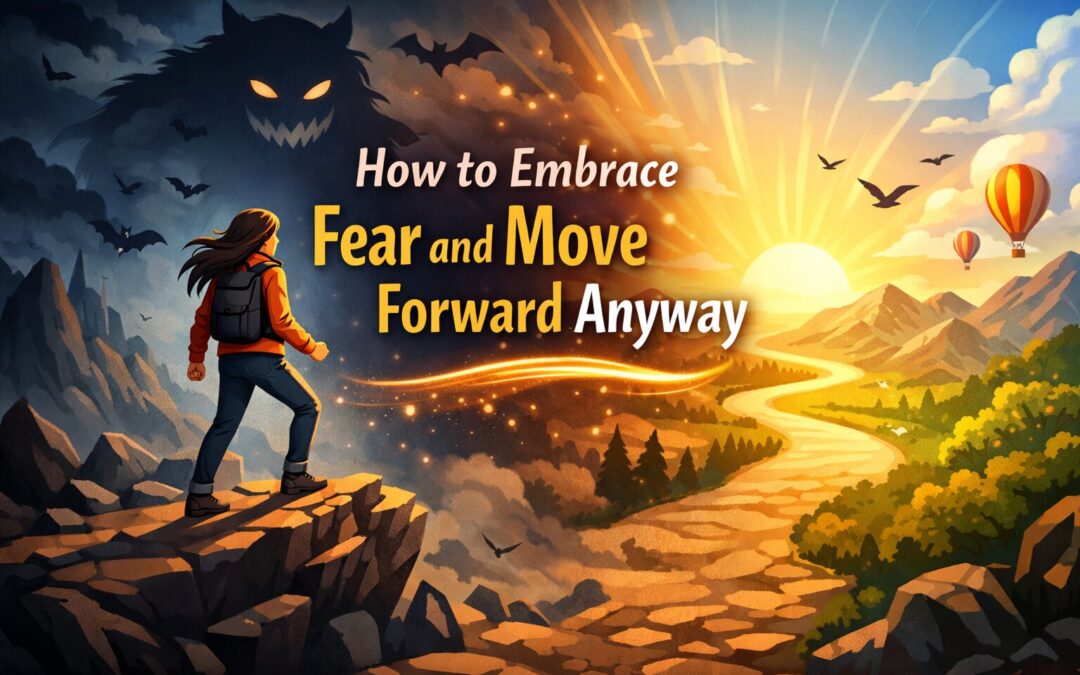
Fear is one of the most powerful emotions humans experience. It protects us from danger, yet it can also hold us back from opportunities, growth, and happiness. Many people believe that successful or confident individuals are fearless, but the truth is quite different. The most successful people simply learn how to embrace fear and move forward despite it.
Learning to face fear instead of avoiding it is a life-changing skill. When you understand that fear is not your enemy but a signal for growth, you can begin transforming hesitation into courage and action.
Understanding the Nature of Fear
Fear often appears when we step outside our comfort zone. Whether it’s starting a new career, speaking in public, building a business, or making an important life decision, fear shows up to warn us about the unknown.
However, the unknown is also where growth happens.
Many people stay stuck because they wait for fear to disappear before taking action. Unfortunately, fear rarely disappears on its own. Instead, it fades when we begin to move forward despite it. By acknowledging fear rather than suppressing it, we allow ourselves to respond with awareness instead of panic.
Accept Fear as a Natural Part of Growth
One of the most empowering mindset shifts you can make is realizing that fear is normal. Every person who has ever achieved something meaningful has experienced fear at some point.
When you accept fear as a natural part of the journey, it stops feeling like a barrier and starts feeling like a signal that you are stepping into something important. Growth often feels uncomfortable because it pushes us beyond familiar patterns.
Instead of asking yourself, “Why am I so afraid?” try asking, “What is this fear trying to teach me?”
This small shift can transform fear from an obstacle into a guide.
Take Small Steps Forward
One of the biggest mistakes people make when facing fear is trying to eliminate it completely before acting. A better strategy is to take small, manageable steps forward.
If something feels overwhelming, break it down into smaller actions. Each step you take builds confidence and proves to your mind that progress is possible.
For example:
Speak up once in a meeting instead of trying to give a long presentation.
Start working on a project for just 30 minutes instead of finishing everything at once.
Reach out to one new opportunity rather than worrying about the final result.
These small actions gradually weaken fear and strengthen courage.
Reframe Fear as Excitement
Interestingly, the physical sensations of fear and excitement are very similar. Your heart beats faster, your mind becomes alert, and your body prepares for action.
Instead of labeling these sensations as fear, try reframing them as excitement. This mental shift can help you channel nervous energy into motivation.
When you start seeing fear as a sign that something meaningful is about to happen, it becomes easier to move forward with confidence.
Focus on Progress, Not Perfection
Fear often grows stronger when we pressure ourselves to be perfect. The fear of making mistakes can stop us from even trying.
But perfection is not the goal progress is.
Every successful journey includes mistakes, learning experiences, and adjustments. When you allow yourself to be imperfect, you create space for growth and resilience.
Progress happens when you keep showing up, even when things feel uncertain.
Build Self-Trust Through Action
Confidence is not something that appears overnight. It grows through consistent action. Each time you face a fear and take a step forward, you build trust in yourself.
Over time, this trust becomes stronger than the fear that once held you back.
You begin to realize that you are capable of handling challenges, adapting to change, and learning from any situation. This realization creates inner strength that cannot be shaken easily.
Moving Forward With Courage
Embracing fear does not mean eliminating it. It means acknowledging it while choosing to move forward anyway. Fear may always appear when you step into something new, but it does not have to control your decisions.
Courage is not the absence of fear it is the decision to act despite it.
When you learn to embrace fear, you unlock opportunities, growth, and experiences that would otherwise remain out of reach. Every step forward becomes proof that you are stronger than your doubts.
The path to growth begins the moment you decide that fear will no longer stop you from becoming the person you are meant to be.