
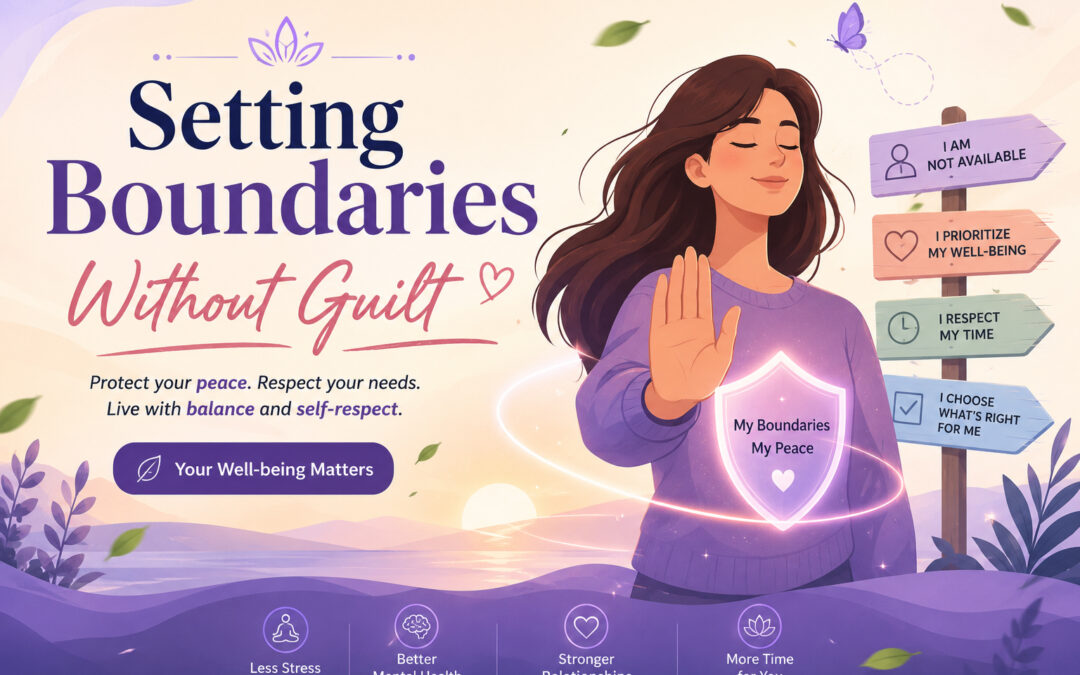
Setting boundaries is one of the most powerful forms of self-respect. Yet, many people struggle with saying “no” because they fear disappointing others, creating conflict, or appearing selfish. The truth is that healthy boundaries are not walls that push people away—they are guidelines that protect your emotional, mental, and physical well-being.
If you constantly prioritize everyone else’s needs over your own, you may eventually experience burnout, resentment, and emotional exhaustion. Learning to set boundaries without guilt allows you to build healthier relationships while staying true to yourself.
What Are Healthy Boundaries?
Boundaries are the limits you establish to define what you are comfortable with and how you expect others to treat you. They communicate your values, protect your energy, and help maintain emotional balance.
Healthy boundaries can exist in every area of life, including:
- Personal relationships
- Family dynamics
- Friendships
- Workplace interactions
- Social commitments
- Emotional and digital spaces
When boundaries are respected, relationships become more honest, balanced, and fulfilling.
Why Do People Feel Guilty About Setting Boundaries?
Many people were raised to believe that putting others first is always the right thing to do. Over time, this belief can create feelings of guilt whenever they choose themselves.
Common reasons people struggle with boundaries include:
- Fear of rejection
- Desire to please everyone
- Low self-worth
- Fear of confrontation
- Childhood conditioning
- Belief that saying “no” is selfish
However, constantly sacrificing your own needs does not create healthy relationships. It creates imbalance.
The Importance of Setting Boundaries
Healthy boundaries improve every aspect of your life. They help you protect your mental health while allowing others to understand your limits.
Benefits include:
- Reduced stress and anxiety
- Greater self-confidence
- Healthier relationships
- Improved emotional well-being
- Better work-life balance
- More energy for personal growth
Remember, every time you say “yes” to something that drains you, you may be saying “no” to your own peace.
How to Set Boundaries Without Feeling Guilty
Know Your Limits
Before communicating boundaries, understand what makes you feel uncomfortable or overwhelmed. Self-awareness is the first step toward creating healthy limits.
Ask yourself:
- What situations leave me emotionally drained?
- What behaviors do I no longer want to tolerate?
- What do I need to feel respected?
Your answers will help define your boundaries.
Communicate Clearly
Healthy boundaries don’t require lengthy explanations. Simple, respectful communication is often enough.
Examples include:
- “I’m not available today.”
- “I need some personal time.”
- “I can’t commit to that right now.”
- “That doesn’t work for me.”
Being direct is not rude—it is honest.
Stop Over-Explaining
Many people explain themselves excessively because they hope others will approve of their decision.
The reality is that your boundaries do not require permission.
A respectful “no” is a complete sentence.
Accept That Not Everyone Will Understand
Some people benefit from your lack of boundaries. They may react negatively when you begin protecting your time and energy.
Their reaction does not mean your boundary is wrong.
Healthy relationships adapt. Unhealthy ones often resist change.
Practice Consistency
Boundaries only work when they are consistent. If you repeatedly ignore your own limits, others may struggle to take them seriously.
Respect your own boundaries first, and others are more likely to respect them as well.
Boundaries Strengthen Relationships
Contrary to popular belief, boundaries do not damage relationships—they improve them.
Clear expectations reduce misunderstandings, resentment, and emotional frustration. They create space for trust, mutual respect, and genuine connection.
People who respect your boundaries are showing that they value you, not just what you can do for them.
Let Go of the Guilt
Feeling guilty after setting a boundary is normal, especially if you’ve spent years putting others first. But guilt is often a learned emotional response—not proof that you’ve done something wrong.
Instead of asking:
“Will they be upset?”
Ask yourself:
“Am I honoring my own well-being?”
Choosing yourself is not selfish. It is necessary for long-term emotional health.
Over time, setting boundaries becomes easier, and the guilt begins to fade as your confidence grows.
Final Thoughts
Setting boundaries without guilt is an act of courage, self-respect, and emotional maturity. Every healthy relationship begins with mutual respect, and that includes respecting your own needs.
You are not responsible for meeting everyone’s expectations at the expense of your own happiness. By establishing clear, compassionate boundaries, you create space for healthier relationships, greater peace of mind, and lasting personal growth.
Remember, protecting your energy is not selfish it is one of the healthiest choices you can make.