
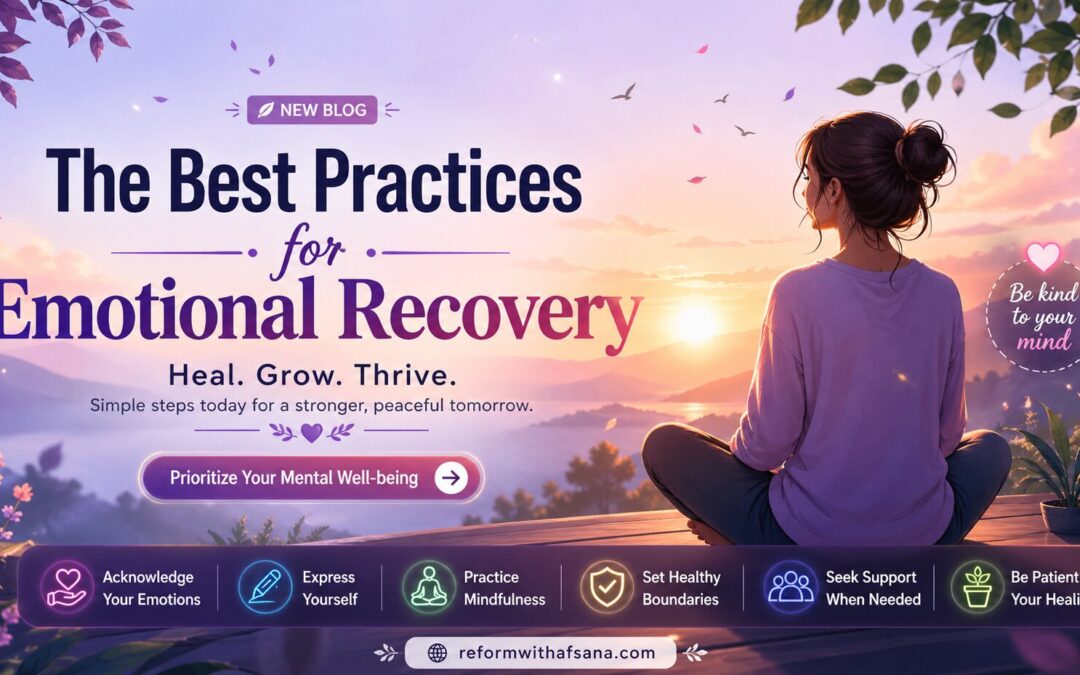
Emotional recovery is not a straight path it is a journey that requires patience, self-awareness, and consistent care. Whether you are healing from stress, trauma, heartbreak, anxiety, or emotional burnout, the process of rebuilding your inner balance takes time. The good news is that with the right practices, emotional recovery becomes not only possible but deeply transformative.
In today’s fast-paced world, many people ignore their emotional well-being while focusing only on external success. However, true healing begins when you start paying attention to your inner world. Below are some of the best practices that can guide you toward a healthier emotional state and long-term recovery.
1. Acknowledge Your Emotions Honestly
The first step in emotional recovery is acceptance. Suppressing emotions often leads to deeper mental stress. Instead, allow yourself to feel what you are experiencing without judgment. Whether it is sadness, anger, fear, or confusion acknowledging emotions is the beginning of healing.
When you accept your feelings, you give yourself permission to heal.
2. Create Space for Emotional Expression
Bottling up emotions can create internal pressure. Find healthy ways to express yourself such as journaling, talking to a trusted friend, therapy, or even creative activities like painting or music. Expression helps release emotional weight and brings clarity to your thoughts.
Regular emotional expression also prevents long-term mental exhaustion.
3. Build a Consistent Self-Care Routine
Self-care is not a luxury; it is a necessity for emotional recovery. Simple habits like proper sleep, balanced nutrition, daily walks, and mindfulness exercises can significantly improve emotional stability.
Even 15–20 minutes of daily self-care can make a noticeable difference in your mood and mental clarity.
4. Practice Mindfulness and Grounding Techniques
Mindfulness helps you stay present instead of getting lost in past regrets or future worries. Techniques such as deep breathing, meditation, and grounding exercises allow your mind to settle and reduce emotional overload.
When practiced regularly, mindfulness strengthens emotional resilience.
5. Set Healthy Boundaries
One of the most important aspects of emotional recovery is learning to protect your energy. This means saying no to toxic relationships, limiting exposure to negative environments, and prioritizing your mental peace.
Healthy boundaries are essential for maintaining long-term emotional stability.
6. Seek Professional Support When Needed
Sometimes emotional recovery requires guidance. Therapists, counselors, or emotional wellness coaches can provide structured support and tools to help you heal more effectively. Seeking help is not a weakness it is a strong step toward recovery.
7. Surround Yourself with Positive Influences
The people around you play a major role in your emotional health. Spend time with those who support, uplift, and understand you. Positive relationships can accelerate healing and give you emotional strength during difficult times.
8. Be Patient With Your Healing Process
Emotional recovery does not happen overnight. There will be good days and difficult days, and that is completely normal. Healing is not linear, so avoid rushing the process. Give yourself time and compassion.
Conclusion
Emotional recovery is a deeply personal journey that requires self-awareness, patience, and consistent effort. By incorporating these best practices into your life, you can slowly rebuild your emotional strength and find inner peace again. Remember, healing is not about becoming someone new it is about returning to your true self with more wisdom and clarity.