
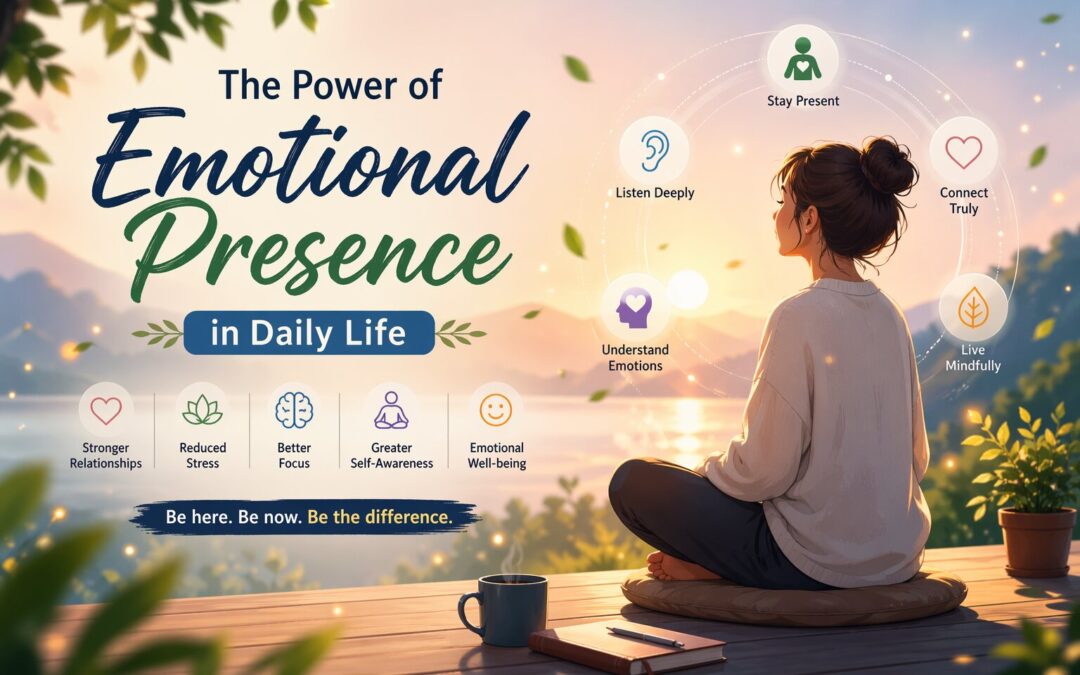
In today’s fast-paced world, people are constantly distracted by notifications, responsibilities, and endless to-do lists. While we may physically be present in our daily routines, our minds often wander elsewhere either stuck in the past or worrying about the future. This disconnect leads to stress, misunderstandings, and emotional exhaustion. This is where the true power of emotional presence comes into play.
What is Emotional Presence?
Emotional presence means being fully aware and engaged in the current moment, not just physically but emotionally as well. It involves actively listening, understanding feelings both yours and others’ and responding with awareness rather than reacting impulsively.
When you are emotionally present, you are not distracted by your phone during a conversation, nor are you mentally rehearsing your next response. Instead, you are fully tuned in, creating a deeper and more meaningful connection with people and experiences.
Why Emotional Presence Matters
Emotional presence plays a crucial role in improving both personal and professional aspects of life. When you practice being present, your relationships become stronger because people feel heard, valued, and understood. It builds trust and reduces unnecessary conflicts.
In addition, emotional presence enhances mental clarity. When your mind is not cluttered with distractions, you can make better decisions and handle challenges more effectively. It also reduces anxiety, as you are focused on what is happening now rather than worrying about uncertainties.
Benefits of Practicing Emotional Presence
- Improved Relationships: Being emotionally available helps you connect deeply with family, friends, and colleagues.
- Better Communication: You listen more attentively and respond thoughtfully.
- Reduced Stress: Staying in the present moment prevents overthinking and anxiety.
- Increased Self-Awareness: You become more aware of your emotions and triggers.
- Enhanced Productivity: A focused mind leads to better efficiency and performance.
How to Develop Emotional Presence
Developing emotional presence is a skill that requires consistent practice. Here are some simple yet powerful ways to incorporate it into your daily life:
1. Practice Mindful Listening
When someone is speaking, give them your full attention. Avoid interrupting or thinking about your response. This not only improves communication but also strengthens relationships.
2. Limit Distractions
Put away your phone or turn off notifications during important conversations or tasks. Even small distractions can break emotional connection.
3. Focus on Your Breath
Taking a few deep breaths can help you center yourself and return to the present moment. This is especially useful during stressful situations.
4. Acknowledge Your Emotions
Instead of suppressing your feelings, recognize and accept them. Understanding your emotions helps you respond in a calm and balanced way.
5. Slow Down
Life doesn’t always need to be rushed. Slowing down allows you to experience moments more fully and reduces mental clutter.
Emotional Presence in Everyday Situations
Emotional presence can be practiced in simple daily activities. For example, when spending time with family, truly engage in the moment rather than checking your phone. At work, focus on one task at a time instead of multitasking, which often reduces efficiency.
Even during challenging conversations, emotional presence helps you stay calm and respond thoughtfully instead of reacting emotionally. This can prevent misunderstandings and strengthen mutual respect.
Overcoming Common Challenges
Many people struggle with staying emotionally present due to habits like overthinking or constant multitasking. The key is to start small. You don’t need to be perfect just make a conscious effort to be present for a few moments each day.
Consistency is more important than perfection. Over time, these small efforts will turn into a natural habit, transforming the way you experience life.
Conclusion
The power of emotional presence lies in its simplicity. By being fully engaged in the present moment, you can improve your relationships, reduce stress, and live a more meaningful life. It doesn’t require drastic changes just a shift in awareness.
Start today. Be present in your conversations, your work, and your experiences. Because life isn’t happening in the past or the future it’s happening right now.